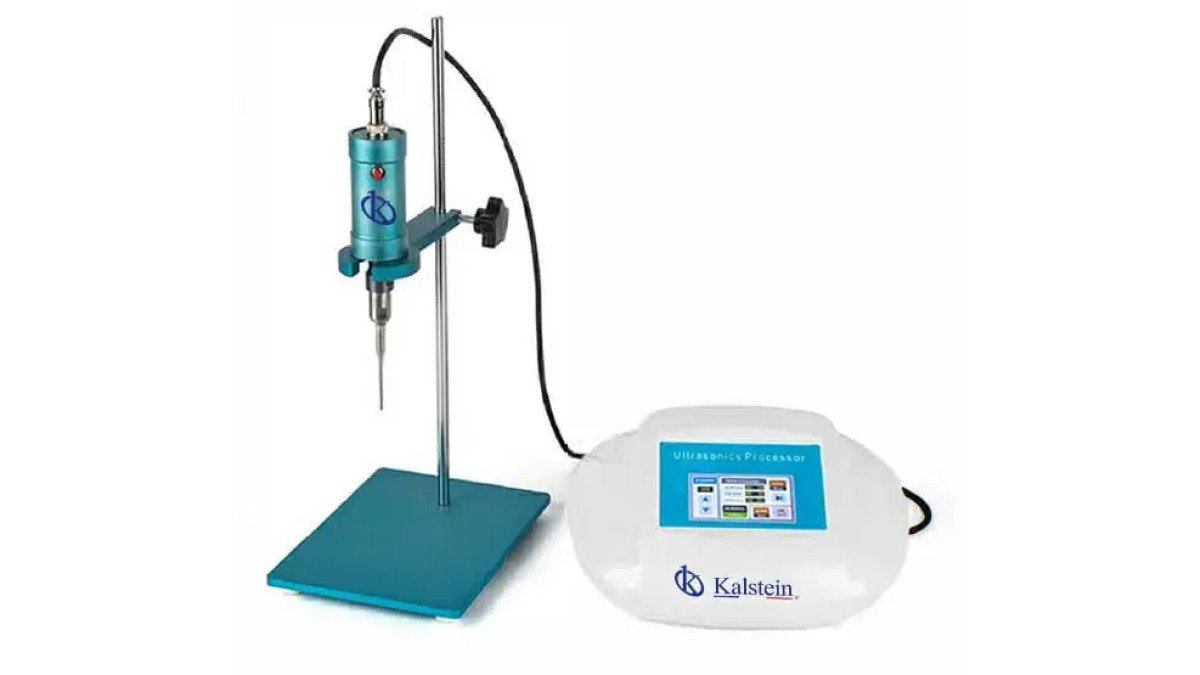
Ultrasonic Homogenizers: Practical Applications and Techniques 2026
Ultrasonic homogenizers have become indispensable in various laboratory settings, including research, biotechnology, and academia. Their ability to facilitate the efficient processing of liquids through ultrasonic waves makes them a valuable tool for professionals in these fields. In this article, we will explore the applications, techniques, and best practices for using ultrasonic homogenizers in 2026.
What is it used for in 2026
Ultrasonic homogenizers are primarily used for the disruption of cells, emulsification, and particle size reduction in liquids. Their applications span multiple disciplines, including:
- Biotechnology: Used for cell lysis, extraction of nucleic acids, and protein extraction.
- Pharmaceuticals: Employed in drug formulation and the development of nanoparticle-based drug delivery systems.
- Environmental Science: Useful in analyzing environmental samples and processing waste materials.
- Food Technology: Applied in food processing, such as homogenous emulsions in sauces and dressings.
History and evolution of the technology
The technology behind ultrasonic homogenizers dates back to the mid-20th century when scientists first discovered the cavitation effect produced by ultrasound in liquids. Over the years, advancements in ultrasonic technology have led to the development of more efficient and reliable devices that can operate at various frequencies and power outputs. Today, ultrasonic homogenizers are designed with digital interfaces, providing greater control over processing parameters, thereby enhancing reproducibility and efficiency in laboratory workflows.
How to use it step by step
Using an ultrasonic homogenizer involves the following steps:
- Preparation: Select the appropriate homogenizer model based on your specific needs. Prepare the sample by weighing and measuring the required amount of liquid.
- Setup: Place the sample in a suitable container. Connect the ultrasonic probe to the homogenizer and ensure all connections are secure.
- Settings Adjustment: Set the desired parameters, such as power output, frequency, and time duration. Refer to the homogenizer manual for optimal settings related to your specific application.
- Processing: Begin the homogenization process by activating the device. Monitor the sample during processing to ensure desired outcomes are achieved.
- Post-processing: Once processing is complete, carefully remove the container and probe. Analyze the sample as needed.
Best techniques and protocols
To maximize the efficacy of ultrasonic homogenizers, it is essential to follow best practices:
- Cooling: Use an ice bath or cooling jacket to prevent overheating during prolonged homogenization.
- Optimizing Amplitude: Adjust the amplitude based on sample type; higher amplitudes may be required for tougher samples.
- Time and Power: Experiment with different durations and power levels to find the optimal settings for your specific sample.
- Sample Volume: Ensure that the volume of liquid is appropriate for the probe size to achieve efficient sonication.
Practical applications by laboratory type
Ultrasonic homogenizers are versatile and can be used across various laboratory types:
- Research Laboratories: Ideal for sample preparation in molecular biology and biochemistry.
- Industrial Laboratories: Utilized for the production of emulsions and dispersions in larger quantities.
- Food Testing Laboratories: Valuable for homogenizing food samples to ensure uniformity in testing.
Regulations, standards and certifications
When using ultrasonic homogenizers, compliance with relevant regulations and standards is crucial. Laboratories should adhere to:
- ISO 9001 for quality management systems.
- Good Laboratory Practice (GLP) guidelines to ensure reliability and reproducibility of results.
- Health and safety standards relevant to handling biological and chemical samples.
Comparison with alternative technologies
While ultrasonic homogenizers offer unique benefits, it is essential to compare them with alternative technologies:
- High-Shear Mixers: Better for larger volumes but may not achieve the same level of cell disruption.
- Bead Mills: Effective for tough samples but often require more maintenance and are more complex to operate.
- Homogenizers: Mechanical homogenizers can be less efficient, particularly for small sample sizes.
Comparison of available models
| Model | Best for | Key specs | Recommended use case |
|---|---|---|---|
| YR05829 | Cell lysis and emulsification | Power: 5-150W, Frequency: 19-25KHz, Capacity: 0.1-50ml | Small-scale biological samples |
| YR05830 | Protein extraction | Power: 5-250W, Frequency: 19-25KHz, Capacity: 0.5-100ml | Medium-sized biological samples |
| YR05831 | Advanced emulsification | Power: 5-400W, Frequency: 19-25KHz, Capacity: 0.5-300ml | High-throughput applications |
| YR05831-op1 | General purpose | Power: 5-400W, Frequency: 19-25KHz, Capacity: 0.5-300ml | Versatile lab applications |
| YR05831-op2 | Cost-effective solution | Power: 5-400W, Frequency: 19-25KHz, Capacity: 0.5-300ml | Budget-conscious labs |
| YR05832 | Large volume processing | Power: 650-1800W, Frequency: 20-25KHz, Capacity: 0.2-1200ml | High-volume industrial applications |
Common mistakes and how to avoid them
Utilizing ultrasonic homogenizers can yield impressive results, but common mistakes should be avoided:
- Neglecting Cooling: Always cool samples to prevent overheating.
- Ignoring Manufacturer Instructions: Follow the specific guidelines provided for each model.
- Using Incorrect Probe Size: Match the probe size to the sample volume for optimal results.
Maintenance, calibration and good practices 2026
Regular maintenance is vital for consistent performance. Key practices include:
- Clean the ultrasonic probe thoroughly after each use.
- Calibrate the device according to the manufacturer's schedule to ensure accurate results.
- Inspect all connections and components regularly for wear and tear.
Cost-benefit analysis 2026
Investing in ultrasonic homogenizers can lead to significant cost savings in laboratory workflows. Benefits include:
- Reduced processing time, leading to higher productivity.
- Versatility in applications reduces the need for multiple devices.
- Improved sample quality, resulting in better research outcomes.
Frequently asked questions
What is the best ultrasonic homogenizer for cell lysis?
The best ultrasonic homogenizer for cell lysis depends on your sample volume and type. Models like YR05831 are ideal for high-throughput applications, while YR05829 is effective for smaller samples.
How do I determine the optimal settings for my application?
Optimal settings vary based on the sample type and desired outcomes. Start with manufacturer recommendations and adjust power, time, and amplitude based on test results.
Can ultrasonic homogenizers process hard samples?
Yes, but hard samples may require higher power settings and longer processing times. Ensure you select a model with sufficient power output for tough samples.
What safety precautions should I take when using ultrasonic homogenizers?
Always wear appropriate personal protective equipment (PPE) such as gloves and goggles. Ensure the workspace is clear of obstructions and that the device is operated by trained personnel.
How often should I calibrate my ultrasonic homogenizer?
Calibration frequency depends on use. For regular lab use, calibrate quarterly. However, if you notice discrepancies in results, perform recalibration immediately.
Are ultrasonic homogenizers suitable for all types of samples?
Ultrasonic homogenizers are versatile but may not be ideal for samples that are sensitive to heat or those that foam excessively. Always evaluate sample compatibility first.
Where can I request a quote for ultrasonic homogenizers?
You can request a quote on Kalstein Plus, where a wide range of ultrasonic homogenizers is available for your specific laboratory needs.
If you are looking for a fusion of innovation and quality, you have come to the right place. At Kalstein, we offer you the luxury of exploring our exclusive catalog of laboratory equipment. We manufacture every device to the highest standards of excellence. Our intuitive and seamless online purchasing channels are designed for your convenience, securing the most competitive prices. Hesitate no longer — we bring science to life, it is time to become part of our community.