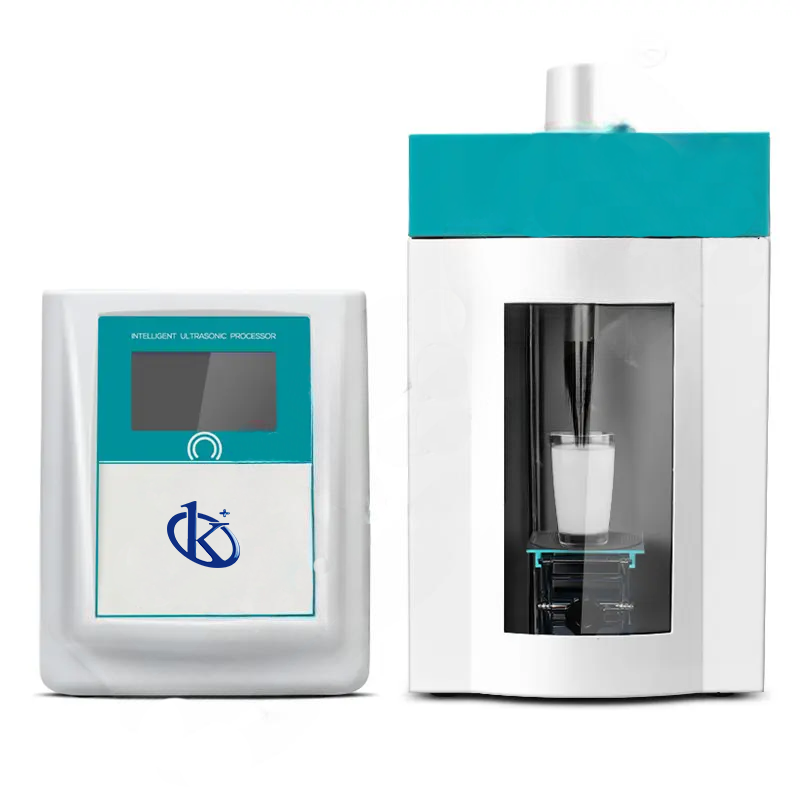
Ultrasonic Homogenizers: Applications and Techniques 2026
What is it used for in 2026
Ultrasonic homogenizers are widely utilized in laboratory settings for their ability to efficiently disrupt cell structures, emulsify mixtures, and reduce particle sizes. In 2026, these devices are essential in various applications including:
- Cell Lysis: Breaking down cell membranes for the extraction of proteins, DNA, or RNA.
- Emulsification: Creating stable emulsions in formulations for pharmaceuticals and cosmetics.
- Dispersion: Ensuring uniform particle distribution in suspensions for inks, paints, and food products.
- Deagglomeration: Breaking down aggregates in powders to achieve a consistent particle size.
History and evolution of the technology
The technology behind ultrasonic homogenizers has evolved significantly since its inception. Initially developed in the mid-20th century, the first ultrasonic devices were large and cumbersome, primarily used in industrial applications. Over the years, advancements in microchip technology allowed for miniaturization and increased efficiency. Today, ultrasonic homogenizers are equipped with touch screens, PID control, and automatic temperature monitoring, making them user-friendly and effective in research and clinical laboratories.
How to use it step by step
Using an ultrasonic homogenizer involves several steps:
- Preparation: Gather samples and necessary accessories such as probe tips and containers.
- Setup: Place the sample in a suitable container, ensuring it is compatible with ultrasonic processing.
- Adjust Settings: Set the power, duration, and pulse mode on the device based on your specific application.
- Insert Probe: Carefully insert the ultrasonic probe into the sample without touching the container's bottom.
- Start Homogenization: Activate the homogenizer, monitoring the process for temperature changes or alarms.
- Post-Processing: Once completed, remove the probe, clean it, and analyze the homogenized sample.
Best techniques and protocols
To achieve optimal results when using ultrasonic homogenizers, consider implementing these best techniques and protocols:
- Optimize Power Settings: Adjust power levels according to the sample type; lower for sensitive samples, higher for tougher materials.
- Pulsing Technique: Use pulsed ultrasound to avoid excessive heating and preserve sample integrity.
- Temperature Control: Monitor and control sample temperatures to prevent denaturation of sensitive components.
- Sample Volume: Use the appropriate sample volume for each device model to maximize efficiency.
Practical applications by laboratory type
Ultrasonic homogenizers find applications across various laboratory types:
- Clinical Laboratories: Used for extracting nucleic acids and proteins from biological samples.
- Pharmaceutical Laboratories: Ideal for developing emulsions and formulations for drug delivery systems.
- Food and Beverage Laboratories: Emulsifying ingredients for sauces, dressings, and beverages to improve texture and shelf life.
- Cosmetic Laboratories: Homogenizing creams and lotions to achieve a uniform consistency and enhanced stability.
Regulations, standards and certifications
In 2026, laboratories using ultrasonic homogenizers must adhere to various regulations and certifications to ensure safety and efficacy:
- ISO 9001: Quality management standards for manufacturing and service delivery.
- GLP (Good Laboratory Practices): Guidelines ensuring consistent and reliable laboratory results.
- CE Marking: Certification indicating compliance with health, safety, and environmental protection standards in the European Economic Area.
Comparison with alternative technologies
Ultrasonic homogenizers can be compared with other homogenization techniques:
- Mechanical Homogenization: Utilizes shear force but may result in higher temperatures and less uniform results.
- High-Pressure Homogenization: Effective for emulsions but can be costly and requires significant maintenance.
- Microfluidics: Provides precise control over fluid dynamics but may not be suitable for larger sample volumes.
Comparison of available models
| Model | Best for | Key specs | Recommended use case |
|---|---|---|---|
| YR05015 | Small sample extraction | Power: 1.5 – 150W, Capacity: 0.1 – 150 ml, Price: $756.00 | Ideal for biological samples and small-scale emulsions. |
| YR05016 | Medium sample processing | Power: 2-5 – 250 W, Capacity: 0.1 – 300 ml, Price: $882.00 | Suitable for moderate volume emulsification tasks. |
| YR05017 | Versatile applications | Power: 10 – 650 W, Capacity: 0.1 – 500 ml, Price: $1050.00 | Great for a variety of laboratory applications including cell lysis. |
| YR05018 | Advanced emulsification | Power: 10 – 900 W, Capacity: 0.1 – 600 ml, Price: $1281.00 | Best for cosmetic and pharmaceutical formulations. |
| YR05019 | High-capacity processing | Power: 20 – 1 200W, Capacity: 1 – 1 000 ml, Price: $1785.00 | Ideal for larger scale laboratory applications. |
| YR05020 | Maximum performance | Power: 50 – 1 800W, Capacity: 1 – 1 200 ml, Price: $2058.00 | Best for high volume and demanding applications. |
Common mistakes and how to avoid them
When using ultrasonic homogenizers, avoid these common mistakes:
- Incorrect Probe Depth: Ensure the probe is correctly submerged to prevent cavitation damage.
- Overheating Samples: Regularly monitor temperatures to avoid thermal damage to sensitive samples.
- Poor Calibration: Regularly calibrate the device to ensure consistent performance and accurate results.
Maintenance, calibration and good practices 2026
Proper maintenance and calibration are crucial for optimal performance:
- Regular Cleaning: Clean the probe and surrounding areas after each use to prevent contamination.
- Calibration: Perform routine calibration checks at recommended intervals to ensure accuracy.
- Documentation: Maintain records of maintenance and calibration for compliance and troubleshooting.
Cost-benefit analysis 2026
Investing in ultrasonic homogenizers can present significant benefits in 2026:
- Efficiency: These devices can reduce processing time, increasing laboratory throughput.
- Versatility: Suitable for various applications reduces the need for multiple devices.
- Quality of Results: Enhanced uniformity in samples leads to better research outcomes and product consistency.
Frequently asked questions
What are the key considerations when choosing an ultrasonic homogenizer?
When selecting an ultrasonic homogenizer, consider factors such as sample volume, power requirements, and specific applications to ensure optimal performance.
How can I ensure my samples do not overheat during processing?
To prevent overheating, monitor the sample temperature regularly and use pulsing techniques to allow the sample to cool between cycles.
What types of samples can I process with an ultrasonic homogenizer?
Ultrasonic homogenizers can process a wide range of samples, including liquids, emulsions, and biological materials such as tissues and cells.
How often should I calibrate my ultrasonic homogenizer?
Calibration should be performed regularly according to the manufacturer's recommendations or at least once every quarter to ensure accuracy.
Can I use my ultrasonic homogenizer for both emulsions and cell lysis?
Yes, ultrasonic homogenizers are versatile and can be employed for both emulsification and cell lysis processes, depending on their specifications.
What maintenance practices should I follow for my equipment?
Regularly clean the device, perform calibration checks, and document maintenance activities to ensure long-lasting performance and compliance.
If you are looking for a fusion of innovation and quality, you have come to the right place. At Kalstein, we offer you the luxury of exploring our exclusive catalog of laboratory equipment. We manufacture every device to the highest standards of excellence. Our intuitive and seamless online purchasing channels are designed for your convenience, securing the most competitive prices. Hesitate no longer — we bring science to life, it is time to become part of our community.