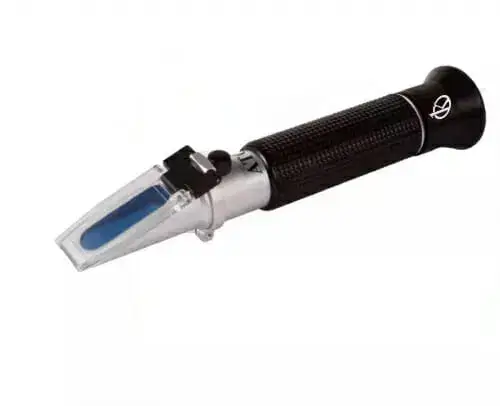
Salinity Refractometers: Practical Applications and Techniques 2026
What is it used for in 2026
Salinity refractometers are essential instruments for measuring the concentration of salt in water. In 2026, their applications span across various fields, including marine biology, aquaculture, environmental monitoring, and food industry quality control. These devices allow professionals to ensure optimal salinity levels, which is crucial for maintaining the health of marine life, achieving product quality, and complying with environmental regulations.
History and evolution of the technology
The salinity refractometer has evolved significantly over the decades. Initially, these devices were manual instruments, requiring significant user input for accuracy. Modern advancements have introduced automatic temperature compensation (ATC), digital displays, and enhanced optical materials that improve precision and ease of use. This evolution has made salinity refractometers more accessible to laboratory professionals, allowing a quicker turnaround in measurements and better integration within laboratory workflows.
How to use it step by step
Using a salinity refractometer involves several simple steps:
- Calibration: Before use, ensure the refractometer is calibrated according to the manufacturer’s instructions, preferably with distilled water to set the baseline.
- Sample Preparation: Collect the water sample to be tested, ensuring it is free from contaminants that could affect readings.
- Applying Sample: Place a few drops of the sample on the prism of the refractometer.
- Reading Measurement: Close the cover to spread the sample and look through the eyepiece or observe the digital display to read the salinity level.
- Recording Results: Document the results and repeat the process for accuracy as needed.
Best techniques and protocols
In 2026, best practices for using salinity refractometers include:
- Consistent sample temperature: Ensure water samples are at room temperature for accurate readings.
- Regular maintenance: Clean the prism after each use to avoid contamination.
- Use of ATC: Utilize models with automatic temperature compensation for improved accuracy.
- Periodic calibration: Regularly calibrate the device to maintain precision over time.
Practical applications by laboratory type
Salinity refractometers find application in various laboratory types:
- Marine Biology Labs: Used for monitoring salinity in aquatic environments.
- Aquaculture Facilities: Ensures optimal salinity levels for fish and shellfish cultivation.
- Food Quality Control: Tests salt concentration in products such as sauces and brines.
- Environmental Monitoring: Measures salinity in water bodies to assess ecosystem health.
Regulations, standards and certifications
Laboratories using salinity refractometers must adhere to various regulations and standards. These may include ISO standards for calibration and measurement accuracy, as well as industry-specific guidelines for water quality monitoring. Certifications from recognized bodies ensure that equipment meets necessary quality and safety requirements.
Comparison with alternative technologies
While salinity refractometers are popular, other technologies like conductivity meters and ion-selective electrodes also serve similar purposes. Conductivity meters measure total dissolved solids, providing broader data but lacking specificity on salinity. In contrast, salinity refractometers offer precise salinity readings, making them suitable for applications where specific salt concentrations are critical.
Comparison of available models
| Model | Best for | Key specs | Recommended use case |
|---|---|---|---|
| YR05887 | High precision salinity measurements | Salinity: 2-4% (20-40 ppt), Specific Gravity: 1.015-1.030 | Marine biology studies and aquaculture |
| YR05888 | General salinity testing | Salinity: 0-4% (0-40 ppt), Specific Gravity: 1.000-1.030 | Food and beverage quality control |
| YR05913 | Versatile applications | Salinity: 2-4% (20-40 ppt), Specific Gravity: 1.015-1.030 | Environmental monitoring and research |
| YR05914 | Research and development | Salinity: 2-4% (20-40 ppt), Specific Gravity: 1.015-1.030 | Advanced laboratory settings |
Common mistakes and how to avoid them
Common mistakes in using salinity refractometers include:
- Improper calibration: Always follow the calibration procedure to ensure accurate measurements.
- Using incorrect sample size: Ensure enough sample is applied to cover the prism.
- Ignoring temperature variations: Utilize ATC features or allow samples to reach room temperature before use.
- Neglecting cleaning: Clean the prism after each use to avoid contamination that can skew results.
Maintenance, calibration and good practices 2026
Maintaining salinity refractometers involves regular cleaning, calibration, and proper storage. Follow these good practices:
- Use distilled water or calibration solutions for periodic calibration.
- Store the device in a protective case to avoid dust and physical damage.
- Regularly inspect the optical elements for cleanliness and integrity.
- Document all maintenance activities for tracking performance over time.
Cost-benefit analysis 2026
When considering a salinity refractometer, weigh the initial investment against the long-term benefits of improved accuracy and efficiency in measurements. While these instruments can vary in price, the potential to enhance research quality and regulatory compliance often justifies the expense. Moreover, ongoing maintenance and calibration ensure longevity, contributing to cost-effectiveness over time.
Frequently asked questions
What type of samples can be measured with a salinity refractometer?
Salinity refractometers are designed to measure aqueous samples, particularly those containing dissolved salts such as seawater or brine solutions.
How often should I calibrate my salinity refractometer?
Calibration should be performed regularly, ideally before each use or at least once a week, depending on usage frequency and application.
Can I use a salinity refractometer for measuring other liquids?
While primarily designed for saline solutions, some refractometers may measure other liquids, but accuracy is not guaranteed. Always refer to the manufacturer’s specifications.
What is the ideal temperature for measuring samples?
Samples should ideally be at room temperature, as temperature variations can affect the accuracy of the readings unless the device has an ATC feature.
What should I do if my refractometer gives inconsistent readings?
Check for calibration issues, clean the prism, and ensure the sample is adequately applied. If problems persist, consult the manufacturer.
Are salinity refractometers suitable for field use?
Many models are portable and robust enough for field use, but ensure you select one designed for such environments if frequent field measurements are necessary.
How do I choose the right salinity refractometer model?
Consider the specific applications, required measurement range, and additional features such as ATC. Compare models based on your laboratory's needs to make an informed choice.
If you are looking for a fusion of innovation and quality, you have come to the right place. At Kalstein, we offer you the luxury of exploring our exclusive catalog of laboratory equipment. We manufacture every device to the highest standards of excellence. Our intuitive and seamless online purchasing channels are designed for your convenience, securing the most competitive prices. Hesitate no longer — we bring science to life; it is time to become part of our community.