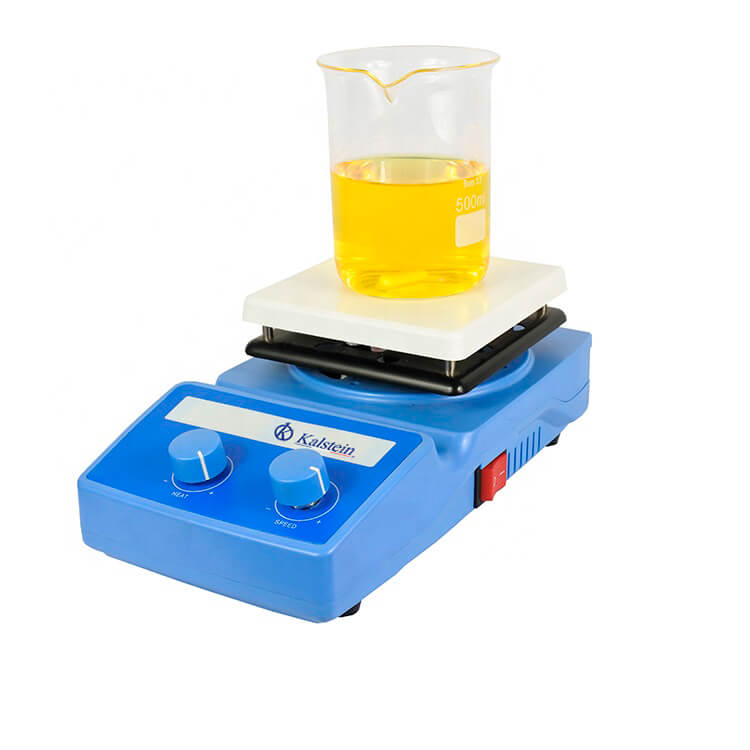
Maximizing ROI and Cost-Benefit Analysis for Laboratory Hotplate Stirrer Investments
In laboratory settings, making informed investment decisions is crucial for maximizing efficiency and minimizing operational costs. Hotplate stirrers, particularly the Analog Ceramic top Hotplate Stirrers, are essential tools in various experimental applications, including chemistry and biology. Understanding the return on investment (ROI) and conducting a thorough cost-benefit analysis can significantly influence your laboratory’s financial health and productivity. This article delves into how you can assess the financial implications of investing in hotplate stirrers, providing insights into specific models and their unique benefits.
Understanding ROI in Laboratory Equipment Investments
ROI is a critical metric used to evaluate the efficiency of an investment. For laboratory equipment such as hotplate stirrers, ROI can be calculated by comparing the gains received from the equipment against its purchase cost. Factors to consider include initial capital expenditure (CAPEX), operational costs, and the longevity of the equipment. Calculating ROI allows lab managers to make informed decisions about which hotplate stirrers will provide the best returns over time.
Cost-Benefit Analysis for Hotplate Stirrers
A cost-benefit analysis (CBA) is a systematic approach to estimating the strengths and weaknesses of alternatives. When evaluating hotplate stirrers, consider both direct and indirect costs associated with their use. These include energy consumption, maintenance fees, and potential impacts on laboratory efficiency. By quantifying these costs against the anticipated benefits, such as improved workflow and enhanced experiment reliability, you can determine whether a specific model is worth the investment.
Comparison of Available Models
| Model | CAPEX (USD) | Max Temperature (°C) | Best For |
|---|---|---|---|
| YR02933 | 125.00 | 325 | Basic laboratory tasks |
| YR02934 | 152.00 | 325 | Small-scale biological applications |
| YR02935 | 190.00 | 380 | Advanced chemistry experiments |
| YR02936 | 265.00 | 400 | High-temperature applications |
Evaluating Long-Term Savings with Hotplate Stirrers
When considering the cost savings associated with hotplate stirrers, it is essential to analyze the total cost of ownership over the equipment's lifespan. Evaluate factors such as energy efficiency, maintenance costs, and potential downtime. For instance, high-performance models like the YR02936 offer precise temperature control and durability, which can lead to fewer replacements and lower energy costs in the long run. By focusing on these aspects, laboratories can better identify which models will deliver the most value over time.
Common Mistakes and How to Avoid Them
When purchasing hotplate stirrers, certain common pitfalls can diminish ROI. A frequent error is not considering the specific needs of the laboratory workflow, leading to the choice of an inappropriate model. Additionally, overlooking the long-term operational costs can result in higher-than-expected expenditures down the line. To avoid these mistakes, perform a comprehensive assessment of laboratory requirements and maintain clear communication with suppliers about your needs.
Energy Consumption and Its Impact on ROI
Energy consumption is a significant factor in the operating costs of laboratory equipment. High-temperature models like the YR02936, while powerful, may also lead to increased energy bills if not used efficiently. Consider implementing energy-efficient practices, such as using timers and pre-heating only when necessary, to reduce energy costs. This can significantly improve the ROI on your investment, especially in higher-utilization environments.
Assessing Model Features Against Laboratory Needs
Each hotplate stirrer offers unique features that cater to different laboratory needs. For example, the YR02934’s PID temperature control is excellent for applications requiring precise temperature stability, while the YR02935’s higher mixing speed range allows it to handle more complex mixtures. Review the features of each model thoroughly and match them with your laboratory's specific requirements to ensure that you choose the optimal equipment for your operations.
Frequently Asked Questions
How can I calculate the ROI for my hotplate stirrer investment in a laboratory setting?
To calculate ROI, assess the initial investment costs against the operational savings and increased productivity gained from using models like the YR02934. Include factors such as CAPEX, maintenance, and efficiency gains over a defined period.
What are the main considerations in a cost-benefit analysis for hotplate stirrers?
Consider initial costs, energy consumption, maintenance expenses, and the expected operational lifespan of the hotplate stirrers such as the YR02936 to evaluate the cost-benefit effectively.
Which hotplate stirrer model offers the best energy efficiency for long-term savings?
The YR02934 model is noted for its balance between performance and energy efficiency, making it a solid choice for labs focused on long-term cost savings.
What factors should I consider when comparing hotplate stirrer models?
Evaluate factors such as temperature range, maximum capacity, control features, and energy efficiency when comparing models like the YR02935 and YR02936 to find the best fit for your laboratory needs.
How do I ensure that my hotplate stirrer meets laboratory safety standards?
To meet safety standards, ensure that the hotplate stirrer has proper certifications, such as CE marking, and review its operational guidelines. Models like the YR02933 are designed with user safety in mind.
What maintenance practices can maximize the lifetime of a hotplate stirrer?
Routine maintenance practices, including regular cleaning and checking temperature controls, can prolong the life of your hotplate stirrer, such as the YR02936, preventing costly repairs or replacements.
How can I effectively train my staff on using hotplate stirrers?
Provide hands-on training and detailed operational manuals for models like the YR02934, ensuring that staff are familiar with the equipment's features and safety protocols to enhance lab productivity.
What are the potential risks of using hotplate stirrers in a laboratory?
Potential risks include burns from hot surfaces and improper handling of chemicals. Ensure that all staff are trained and that models like the YR02935 are used according to the manufacturer’s safety guidelines.
If you are looking for a fusion of innovation and quality, you have come to the right place. At Kalstein, we offer you the luxury of exploring our exclusive catalog of laboratory equipment. We manufacture every device to the highest standards of excellence. Our intuitive and seamless online purchasing channels are designed for your convenience, securing the most competitive prices. Hesitate no longer — we bring science to life, it is time to become part of our community.