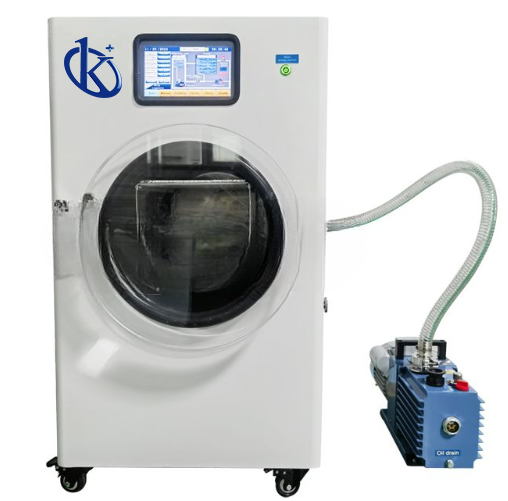
Understanding ROI and Cost-Benefit Analysis for Food Freeze Dryers in Laboratories
The utilization of food freeze dryers in laboratories requires a thorough understanding of the return on investment (ROI) and cost-benefit analysis. These machines play a crucial role in preserving the integrity of food products by removing moisture while maintaining their nutritional value. In this article, we will explore the various models available, examine their operational efficiencies, and provide a detailed cost-benefit analysis to help laboratory professionals make informed purchasing decisions.
Framing the Focus: ROI and Cost-Benefit Analysis in Food Freeze Dryers
In today’s competitive laboratory environment, understanding the ROI on equipment such as food freeze dryers is essential. These machines not only affect operational efficiency but also impact the overall profitability of laboratory processes. By evaluating key metrics such as capital expenditure (CAPEX), operational expenditure (OPEX), and payback periods, laboratories can optimize their equipment investments.
Comparison of Available Models
| Model | CAPEX (USD) | Cost per Batch (USD) | Payback Period (Months) | Best For |
|---|---|---|---|---|
| YR05984 | 2285.00 | 76.17 | 6 | Small-scale research |
| YR05983 | 2215.00 | 110.75 | 8 | Home use |
| YR05985 | 3000.00 | 100.00 | 10 | Fruits and vegetables |
| YR06612 | 171200.00 | 342.00 | 24 | Large scale production |
Understanding Capital Expenditure and Operational Costs
Capital expenditure (CAPEX) refers to the upfront costs associated with purchasing food freeze dryers. For instance, the YR05984 model costs approximately $2285, making it an economically viable choice for small-scale operations. Conversely, the YR06612 model, priced at $171200, is designed for large-scale operations and offers a higher output. Understanding these costs is essential for calculating ROI.
Evaluating Payback Periods
The payback period is a critical metric that indicates how long it will take for a laboratory to recover its investment in food freeze dryers. For example, the YR05984 model has a payback period of approximately 6 months, providing a quicker return on investment compared to the YR06612 model, which has a payback period of 24 months. This information is vital for laboratories looking to optimize their equipment funding.
Cost per Batch Analysis
Cost per batch is another significant metric that helps laboratories evaluate the efficiency of food freeze dryers. The YR05983 model, ideal for home use, has a higher cost per batch at $110.75, while the YR05985 model, suitable for fruits and vegetables, is more efficient with a cost per batch of $100. Understanding these costs can aid in selecting the right model based on expected throughput and budget constraints.
Common Mistakes and How to Avoid Them
When investing in food freeze dryers, common mistakes include failing to conduct a thorough ROI analysis or neglecting to consider long-term operational costs. It is crucial for laboratories to perform detailed evaluations of each model, including their maintenance costs and efficiency metrics, to avoid over-commitment to a high CAPEX model without clear financial justification.
Frequently Asked Questions
What is the ROI for investing in a food freeze dryer in a laboratory?
The ROI for a food freeze dryer, such as the YR05984, can be calculated based on its initial cost of $2285 and its payback period of 6 months. Evaluating the ROI helps labs understand their investment's potential returns based on their specific usage scenarios.
How can I determine the cost per batch for food freeze dryers?
To determine the cost per batch, divide the operational costs by the number of batches produced. For example, with the YR05985 model costing $3000 and a production rate yielding significant volumes, labs can calculate precise costs to assess profitability.
What factors affect the payback period of food freeze dryers?
Factors affecting the payback period include initial investment cost, operational efficiency, and the volume of production. The YR06612 model has a payback period of 24 months due to its high initial cost of $171200, making it suitable for high-demand environments.
How does equipment maintenance impact the cost of food freeze dryers?
Regular maintenance can significantly influence the overall cost of owning food freeze dryers. For instance, neglecting maintenance on the YR05984 may lead to higher operational costs and longer downtime, ultimately affecting ROI.
Which food freeze dryer model is best for small-scale laboratories?
The YR05984 model is ideal for small-scale laboratories, with a reasonable initial cost of $2285 and a payback period of 6 months, making it a cost-effective option for those needing moderate output.
What features should I look for in a food freeze dryer for research purposes?
Key features to consider include temperature control, batch size, and energy consumption. For example, the YR05985 offers precise temperature regulation, which is vital for maintaining the quality of sensitive food items.
Can food freeze dryers be integrated into existing laboratory workflows?
Yes, food freeze dryers like the YR06612 can be seamlessly integrated into existing workflows, provided that laboratories assess their operational capabilities and ensure that the models meet their throughput requirements.
How do I assess the efficiency of different food freeze dryer models?
Efficiency can be assessed through metrics like cost per batch, operational downtime, and throughput. Analyzing these metrics for models like the YR05983 and YR05985 allows laboratories to gauge their overall effectiveness in preserving food quality.
If you are looking for a fusion of innovation and quality, you have come to the right place. At Kalstein, we offer you the luxury of exploring our exclusive catalog of laboratory equipment. We manufacture every device to the highest standards of excellence. Our intuitive and seamless online purchasing channels are designed for your convenience, securing the most competitive prices. Hesitate no longer — we bring science to life, it is time to become part of our community.