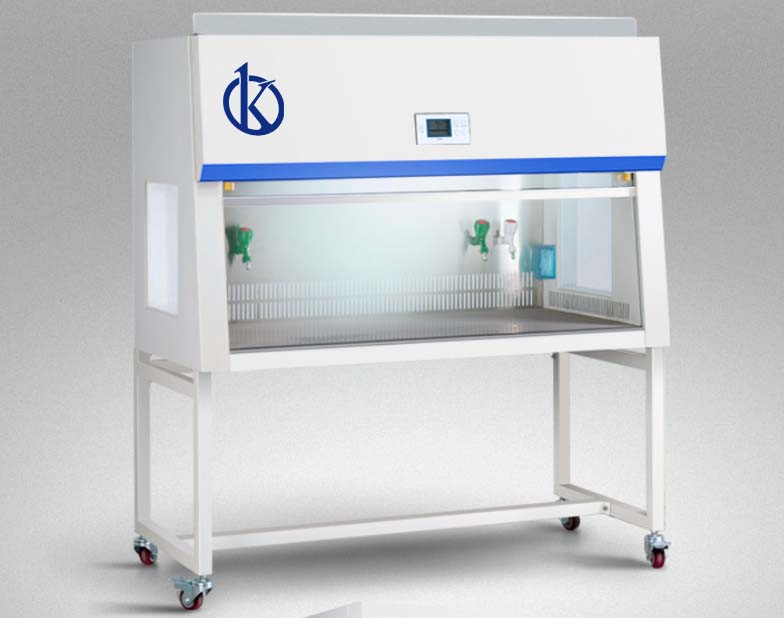
Predictive Maintenance and Recommended Calibration for Vertical Laminar Flow Clean Benches
Vertical Laminar Flow Clean Benches are crucial for ensuring sterile environments in laboratories and industrial settings. The effectiveness of these units hinges not only on their design and functionality but also on how well they are maintained and calibrated. Predictive maintenance and regular calibration are essential practices that can maximize performance and extend the life of these clean benches. This article delves into the recommended maintenance strategies and calibration practices tailored for several models in this category, helping laboratory professionals make informed decisions.
Understanding the Importance of Predictive Maintenance
Predictive maintenance leverages data-driven insights to forecast equipment failures before they occur. This approach minimizes downtime and reduces maintenance costs by avoiding unnecessary repairs. For Vertical Laminar Flow Clean Benches, implementing predictive maintenance involves monitoring performance metrics such as airflow velocity, noise levels, vibration, and filter efficiency. This proactive strategy is essential for laboratories that depend on consistent and reliable equipment performance.
Calibration: Ensuring Accuracy and Compliance
Regular calibration of Vertical Laminar Flow Clean Benches is necessary to ensure they meet stringent cleanliness standards. Calibration helps confirm that these units are functioning within the parameters set by regulatory bodies such as ISO 14644.1. It is critical to establish a calibration schedule based on the frequency of use and the specific requirements of the laboratory environment.
Key Calibration Standards for Vertical Laminar Flow Clean Benches
According to ISO 14644.1, clean benches are categorized based on their cleanliness levels. For example, a Class 100 environment must not exceed 100 particles per cubic meter for particles larger than 0.5 micrometers. Regular calibration checks are essential to ensure these standards are met, particularly in environments dealing with sensitive biological material. Proper calibration verifies that airflow velocity is maintained within the recommended range of 0.3 to 0.6 m/s.
Best Practices for Predictive Maintenance of Vertical Laminar Flow Clean Benches
To implement an effective predictive maintenance program, laboratories should consider the following best practices:
- Regular Performance Monitoring: Utilize sensors to continuously monitor airflow and environmental conditions within the clean bench.
- Data Analysis: Analyze historical performance data to identify patterns and predict potential failures.
- Scheduled Maintenance: Establish a routine maintenance schedule that includes checking and replacing HEPA filters and other components.
- Training Staff: Train laboratory staff to recognize signs of equipment distress and to perform basic troubleshooting.
Recommended Calibration Schedule
A well-planned calibration schedule is vital for ensuring accuracy. A typical calibration schedule for Vertical Laminar Flow Clean Benches may include:
| Calibration Task | Frequency | Responsible Personnel |
|---|---|---|
| Airflow Velocity Check | Monthly | Lab Technician |
| Filter Efficiency Testing | Every 6 months | Service Engineer |
| Vibration Analysis | Annually | Maintenance Team |
| Noise Level Assessment | Quarterly | Lab Technician |
Comparison of Available Models
| Model | Cleaning Class | Airflow Speed | Noise Level (dB) | Recommended Calibration Frequency |
|---|---|---|---|---|
| YR05267-1 | Class 5 | 0.3~0.6 m/s | ≤62 | Monthly |
| YR05734 | Class 100 | 0.25~0.45 m/s | ≤62 | Quarterly |
| YR05735 | Class 100 | 0.25~0.45 m/s | ≤62 | Quarterly |
| YR05736 | Class 100 | 0.25~0.45 m/s | ≤62 | Monthly |
| YR05737 | Class 100 | 0.25~0.45 m/s | ≤62 | Monthly |
| YR05738 | Class 100 | 0.25~0.45 m/s | ≤62 | Quarterly |
Common Mistakes and How to Avoid Them
Laboratory professionals often encounter pitfalls in maintaining and calibrating their Vertical Laminar Flow Clean Benches. Here are some common mistakes and strategies to circumvent them:
- Infrequent Calibration: Avoid having irregular calibration schedules. Set up automated reminders for personnel.
- Neglecting Filter Changes: Regularly monitor filter status and replace them as required to maintain airflow quality.
- Lack of Documentation: Keep detailed maintenance logs and calibration records for compliance with ISO standards.
- Ignoring User Training: Ensure all laboratory staff are trained in proper usage and maintenance protocols to prevent misuse.
Frequently Asked Questions
How can I ensure the reliability of a Vertical Laminar Flow Clean Bench during experiments?
To ensure the reliability of a Vertical Laminar Flow Clean Bench like the YR05736, it is essential to implement a regular maintenance and calibration schedule. A consistent check on airflow velocity, ideally set between 0.25-0.45 m/s, along with periodic filter replacements, helps maintain cleanroom standards as per ISO 14644.1.
What are the critical calibration tasks for Vertical Laminar Flow Clean Benches?
Critical calibration tasks for Vertical Laminar Flow Clean Benches include checking airflow velocity, testing filter efficiency, and assessing noise levels. For example, the YR05267-1 should undergo airflow checks monthly to ensure it operates effectively within its Class 5 cleanliness standard.
Which Vertical Laminar Flow Clean Bench model is best for biotechnological applications?
The YR05267-1 model is well-suited for biotechnological applications due to its Class 5 cleanliness rating, which is ideal for sensitive experiments. Regular predictive maintenance and strict adherence to calibration protocols will ensure optimal operation.
How often should I replace the HEPA filters in my Vertical Laminar Flow Clean Bench?
HEPA filters in models like the YR05734 should be replaced at least every 6 months or sooner if performance monitoring indicates a drop in air quality. Regular checks are essential to maintain compliance with cleanliness standards.
What are the benefits of implementing predictive maintenance for clean benches?
Implementing predictive maintenance for Vertical Laminar Flow Clean Benches can significantly reduce unexpected downtimes and maintenance costs. By using performance data from models like the YR05738, laboratories can anticipate failures, optimize maintenance schedules, and enhance operational efficiency.
What noise levels should I expect from a Vertical Laminar Flow Clean Bench?
Noise levels for models like the YR05735 generally should not exceed 62 dB. Maintaining this standard is crucial for creating a conducive laboratory environment, especially in sensitive research settings.
How do I document maintenance and calibration activities for compliance?
Documenting maintenance and calibration activities can be done by maintaining a detailed logbook that records each task, dates of completion, and personnel responsible. This is essential for compliance with ISO standards and can be easily managed for models like the YR05736.
What is the impact of improper maintenance on clean bench performance?
Improper maintenance can severely impact the performance of Vertical Laminar Flow Clean Benches, leading to reduced airflow, contamination risks, and non-compliance with cleanliness standards. Regular maintenance and calibration are therefore vital for models such as the YR05737.
If you are looking for a fusion of innovation and quality, you have come to the right place. At Kalstein, we offer you the luxury of exploring our exclusive catalog of laboratory equipment. We manufacture every device to the highest standards of excellence. Our intuitive and seamless online purchasing channels are designed for your convenience, securing the most competitive prices. Hesitate no longer — we bring science to life, it is time to become part of our community.