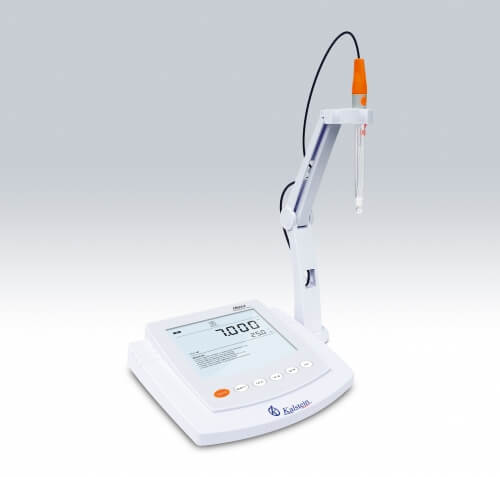
Predictive Maintenance and Recommended Calibration for Table Conductivity Controllers
In the laboratory environment, the efficiency and accuracy of table conductivity controllers are paramount. These devices are critical for measuring the conductivity of solutions, which directly impacts various experimental outcomes. The focus of this article is to delve into the importance of predictive maintenance and the recommended calibration intervals for table conductivity controllers, ensuring optimal performance and compliance with industry standards.
Understanding Table Conductivity Controllers
Table conductivity controllers are essential laboratory instruments used to measure the conductivity of liquids. They are widely utilized in various applications, including water quality testing, chemical analysis, and biological research. These devices not only assist in ensuring compliance with regulatory standards but also play a significant role in predictive maintenance strategies, which help in avoiding unexpected failures.
Benefits of Predictive Maintenance in Table Conductivity Controllers
Predictive maintenance refers to a proactive approach that involves monitoring the condition of equipment to predict when maintenance should be performed. This method helps to avoid unexpected breakdowns and can significantly reduce maintenance costs. For table conductivity controllers, implementing a predictive maintenance strategy can lead to improved accuracy in measurements, reduced downtime, and extended equipment lifespan.
Recommended Calibration Intervals for Table Conductivity Controllers
Calibration is a critical aspect of maintaining the accuracy of table conductivity controllers. Manufacturers typically recommend calibration at specified intervals, often dependent on usage frequency and application. For instance, devices like the Desktop pH / Conductivity Meter YR01836-1 may require calibration every month for high-frequency use, while others might only need calibration quarterly.
Specific Calibration Practices for Different Models
Each model of table conductivity controller may have unique calibration requirements. For example, the Desktop Conductivity Meter YR01828 features automatic temperature compensation and suggests calibration every three months. In contrast, the Desktop Conductivity Meter YR01829, which allows for 1 to 3-point calibration, might require more frequent checks depending on the laboratory's operational conditions.
Impact of Proper Calibration on Laboratory Performance
Proper calibration ensures the reliability of conductivity readings, which is essential for making informed decisions in laboratory settings. A calibrated table conductivity controller minimizes errors that can lead to significant discrepancies in experimental results. This is especially crucial when working with sensitive samples where slight variations in conductivity can affect outcomes.
Common Mistakes and How to Avoid Them
Laboratories often make critical mistakes in maintaining their table conductivity controllers. One of the most common errors is neglecting regular calibration, which can lead to inaccurate readings. Additionally, not following the manufacturer's guidelines for maintenance can result in equipment failure. To avoid these pitfalls, laboratories should develop a standardized maintenance schedule that includes regular checks and calibrations.
Comparison of Available Models
| Model | Recommended Calibration Frequency | Best Use Case | Price (USD) |
|---|---|---|---|
| YR01836-1 | Monthly | Labs requiring high accuracy | 355.00 |
| YR01836 | Quarterly | General laboratory use | 199.00 |
| YR01829-1 | Monthly | Routine testing and controls | 160.00 |
| YR01829-2 | Monthly | Routine testing and controls | 235.00 |
| YR01829 | Monthly | High-throughput laboratories | 285.00 |
| YR01828 | Quarterly | Water quality analysis | 232.00 |
Key Performance Indicators (KPIs) for Predictive Maintenance
Identifying KPIs for predictive maintenance can greatly enhance the reliability of table conductivity controllers. Common KPIs include Mean Time Between Failures (MTBF) and Mean Time To Repair (MTTR). These metrics assist laboratories in understanding equipment performance and planning maintenance schedules effectively.
FAQs on Predictive Maintenance and Calibration for Table Conductivity Controllers
What is the recommended calibration frequency for the Desktop Conductivity Meter YR01836-1?
The Desktop Conductivity Meter YR01836-1 is recommended to be calibrated monthly for high accuracy in measurements. Regular calibration ensures compliance and reliability in laboratory results.
How does predictive maintenance improve the performance of table conductivity controllers?
Predictive maintenance enhances the performance of table conductivity controllers by predicting potential failures before they occur. This approach minimizes unexpected downtime and extends equipment lifespan.
Which table conductivity controller is best for routine testing and controls?
The Desktop Conductivity Meter YR01829-1 is highly suitable for routine testing and controls due to its accuracy and calibration flexibility. It is designed for labs that require reliability in conductivity measurements.
How often should the Desktop Conductivity Meter YR01828 be calibrated?
The Desktop Conductivity Meter YR01828 should be calibrated quarterly to maintain accuracy, especially in applications related to water quality analysis.
What are the consequences of neglecting the calibration of conductivity meters?
Neglecting the calibration of conductivity meters can lead to inaccurate readings, resulting in flawed experimental outcomes, compliance issues, and potential safety hazards in laboratory settings.
Which model offers the best features for high-throughput laboratories?
The Desktop Conductivity Meter YR01829 is optimized for high-throughput laboratories, offering advanced features for accurate and efficient conductivity measurements across multiple samples.
How can I implement a predictive maintenance strategy in my laboratory?
Implementing a predictive maintenance strategy involves regularly monitoring equipment performance, scheduling maintenance based on condition rather than time, and training staff on best practices to ensure reliability.
What is the impact of automatic temperature compensation on calibration?
Automatic temperature compensation enhances calibration accuracy by adjusting readings based on temperature fluctuations, which is particularly useful in environments where temperatures vary significantly.
If you are looking for a fusion of innovation and quality, you have come to the right place. At Kalstein, we offer you the luxury of exploring our exclusive catalog of laboratory equipment. We manufacture every device to the highest standards of excellence. Our intuitive and seamless online purchasing channels are designed for your convenience, securing the most competitive prices. Hesitate no longer — we bring science to life, it is time to become part of our community.