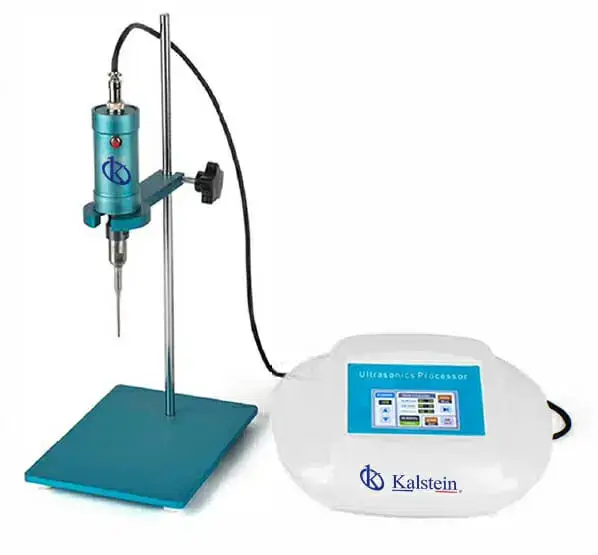
Maximizing ROI through Cost-Benefit Analysis of Ultrasonic Homogenizers
In laboratory settings, making informed decisions about equipment purchases is crucial for optimizing workflow and ensuring cost-effectiveness. This article delves into the return on investment (ROI) and cost-benefit analysis of ultrasonic homogenizers, a vital tool for various applications in laboratories. We will discuss multiple models, their specifications, and how they can impact your laboratory's financial performance.
Understanding Ultrasonic Homogenizers and Their Benefits
Ultrasonic homogenizers are multipurpose devices that utilize ultrasonic waves to emulsify, homogenize, and break down materials at a microscopic level. They are essential for tasks in fields like biochemistry, material science, and clinical diagnostics. By generating cavitation bubbles that collapse in liquids, these devices facilitate the processing of cells, viruses, and other samples efficiently.
Investing in an ultrasonic homogenizer can lead to improvements in sample preparation speed, quality, and reproducibility, resulting in enhanced overall productivity for laboratories. The key is to analyze the return on investment associated with these tools by evaluating their costs versus the benefits they provide.
Cost-Benefit Analysis Framework for Ultrasonic Homogenizers
A thorough cost-benefit analysis involves identifying both direct and indirect costs associated with the purchase and operation of ultrasonic homogenizers. Direct costs may include initial purchase price, maintenance expenses, and energy consumption. Indirect costs can encompass factors like increases in productivity, reduced labor hours, and enhanced sample quality.
Establishing a systematic framework for evaluating these costs allows laboratory managers to make data-driven decisions regarding the acquisition of ultrasonic homogenizers. Understanding how each model serves specific laboratory needs will also facilitate better budgeting and resource allocation.
Comparison of Available Models
| Model | CAPEX (USD) | Cost per Test (USD) | Payback (months) | Recommended Scenario |
|---|---|---|---|---|
| YR05829 | 659.00 | 0.15 | 12 | Small labs with low to medium throughput |
| YR05830 | 659.00 | 0.12 | 10 | Medium labs needing moderate capacity |
| YR05831 | 699.00 | 0.10 | 8 | Labs requiring high-quality emulsification |
| YR05831-op1 | 149.00 | 0.05 | 6 | Budget labs needing basic functionality |
| YR05831-op2 | 95.00 | 0.04 | 5 | Entry-level labs with low throughput |
| YR05832 | 1050.00 | 0.20 | 15 | Advanced labs with specialized needs |
Common Mistakes and How to Avoid Them
When considering the purchase of an ultrasonic homogenizer, laboratories may fall into several traps that can lead to suboptimal decision-making. One common mistake is neglecting to account for the total cost of ownership, which includes maintenance, energy costs, and consumables. Another pitfall is failing to analyze how well a model fits specific laboratory requirements.
To avoid these errors, labs should conduct a thorough assessment of their needs, including expected workloads and the types of samples they process. Additionally, performing a detailed cost-benefit analysis by comparing several models will provide a clearer picture of potential returns and overall value.
Practical Applications of Ultrasonic Homogenizers
Ultrasonic homogenizers are versatile tools applicable in various laboratory settings. They are widely used for cellular disruption, emulsification, and preparing homogeneous mixtures. Each model offers different capabilities, such as varying power levels and processing volumes, allowing labs to choose the right tool for their specific applications.
For instance, the YR05831 model is particularly beneficial for laboratories requiring high-quality emulsification and can handle larger volumes, making it ideal for production environments. On the other hand, the YR05831-op2 is suited for entry-level applications due to its cost-effectiveness and basic features.
Energy Consumption and Sustainability Considerations
In today's environmentally conscious landscape, laboratories must consider the energy consumption of their equipment. Ultrasonic homogenizers can consume varying amounts of energy, which can significantly impact operational costs. Understanding the kWh per run and other resource usage metrics is critical for evaluating the sustainability of equipment choices.
For example, the YR05832 model, while higher in initial cost, offers advanced features that can lead to lower energy consumption per test compared to lower-end models. This results in reduced operational expenses over time, thus enhancing ROI.
ROI Metrics and Performance Indicators
To fully gauge the ROI from ultrasonic homogenizers, laboratories should track several key performance indicators (KPIs). Metrics such as payback period, cost per test, and productivity improvements are essential for understanding the impact of equipment on laboratory operations.
For instance, if a laboratory invests in the YR05831 model, which has a lower cost per test and a quicker payback period, they may realize significant savings in reagent costs and time efficiency. On the contrary, a less efficient model may lead to higher costs over time.
Frequently Asked Questions
How can I determine the ROI of an ultrasonic homogenizer in my lab?
To determine the ROI of an ultrasonic homogenizer, evaluate its purchase cost against the savings generated from increased productivity and reduced reagent usage. For example, using the YR05831 model, which has a cost per test of $0.10, can yield significant savings compared to less efficient models.
What are the energy consumption rates of different ultrasonic homogenizers?
Energy consumption rates vary by model and usage. For example, the YR05832 model may provide lower energy consumption per run, improving overall cost efficiency and sustainability in laboratory operations.
Which ultrasonic homogenizer is best for high-throughput applications?
The YR05831 model is an excellent choice for high-throughput applications due to its efficient processing capabilities and cost-effectiveness, making it ideal for busy laboratories needing to maximize output.
How do different models of ultrasonic homogenizers compare in terms of maintenance costs?
Maintenance costs can vary significantly between models. Generally, more advanced units like the YR05832 may require higher initial maintenance but provide greater long-term savings through efficiency, whereas entry-level models like YR05831-op1 may have lower upkeep costs.
What factors impact the cost per test of ultrasonic homogenizers?
Factors influencing the cost per test include the purchase price, energy consumption, reagent costs, and maintenance expenses. Models like the YR05831 offer lower costs per test due to their efficiency and reliability in processing.
How long can I expect it to take to recoup the investment in an ultrasonic homogenizer?
The payback period varies by model and use case. For instance, the YR05831 model typically has a payback period of under 8 months, making it a favorable option for cost-conscious laboratories.
What are the operational benefits of investing in a higher-end ultrasonic homogenizer?
Investing in a higher-end model like the YR05832 can yield benefits including enhanced processing speed, better sample quality, and lower energy costs per operation, ultimately leading to a better return on investment.
Can ultrasonic homogenizers help in achieving sustainability goals in laboratories?
Yes, ultrasonic homogenizers can contribute to sustainability goals. For instance, the energy-efficient YR05832 model minimizes resource consumption while providing high-quality results, aligning with green laboratory initiatives.
If you are looking for a fusion of innovation and quality, you have come to the right place. At Kalstein, we offer you the luxury of exploring our exclusive catalog of laboratory equipment. We manufacture every device to the highest standards of excellence. Our intuitive and seamless online purchasing channels are designed for your convenience, securing the most competitive prices. Hesitate no longer — we bring science to life, it is time to become part of our community.