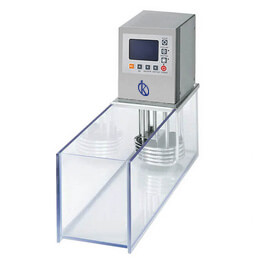
Maximizing ROI and Cost-Benefit Analysis with Transparent Water Baths
In laboratory settings, efficient use of resources is crucial for maintaining operational excellence and achieving favorable return on investment (ROI). Specifically, transparent water baths have gained prominence due to their unique design and capabilities that enhance experimental accuracy. In this article, we will explore key considerations for analyzing cost-benefit scenarios related to transparent water baths and how they can significantly impact ROI.
Understanding the Importance of Cost-Benefit Analysis in Laboratories
Cost-benefit analysis (CBA) is a systematic approach used to evaluate the financial implications of a laboratory equipment purchase. It helps laboratory managers determine if the investment in transparent water baths will yield sufficient returns based on their performance and operational benefits. This analysis should encompass direct costs such as purchase price and maintenance, along with indirect costs like energy consumption and labor.
How Transparent Water Baths Enhance Laboratory Efficiency
Transparent water baths like the YR05081, YR05082, and YR05080 models provide a stable temperature range ideal for various laboratory applications including tissue culture and enzymatic reaction studies. Their design ensures uniform temperature distribution, minimizing experimental errors and thereby reducing resource wastage. Efficient temperature control directly correlates to improved productivity, which is a key component when evaluating ROI.
Initial Investment vs. Long-Term Savings
When assessing ROI, it's essential to compare the initial investment of the transparent water baths against potential long-term savings. For instance, the YR05080 model, priced at $293, offers a capacity of 10 liters. On the other hand, the YR05082, which costs $513, provides a larger capacity of 23 liters. Understanding these capacities allows labs to choose models that meet their demand while optimizing costs.
Detailed Cost Breakdown for Transparent Water Baths
| Model | Purchase Price (USD) | Operating Costs (Annual) | Expected Lifespan (Years) | Total Cost of Ownership (TCO) |
|---|---|---|---|---|
| YR05080 | 293 | 100 | 5 | 793 |
| YR05081 | 403 | 120 | 5 | 903 |
| YR05082 | 513 | 140 | 5 | 1,013 |
The table above illustrates the total cost of ownership (TCO) for each model over a five-year period, factoring in initial purchase price and estimated annual operating costs. This approach allows labs to make informative purchasing decisions based on projected financial performance.
Evaluating Performance Metrics: ROI Calculation
To effectively evaluate ROI, laboratories can utilize performance metrics such as throughput and reduction in waste. For example, if the YR05080 can process 10 samples per hour and significantly reduces reagent wastage compared to less efficient models, this improvement can be quantified in terms of additional profitable experiments conducted. Using a formula for calculating ROI can yield valuable insights into financial benefits.
Comparison of Available Models
| Model | Capacity (L) | Temperature Range (°C) | Price (USD) | Best Application |
|---|---|---|---|---|
| YR05080 | 10 | RT to 80 | 293 | Small sample studies |
| YR05081 | 16 | RT to 80 | 403 | Medium throughput experiments |
| YR05082 | 23 | RT to 80 | 513 | High volume studies |
Common Mistakes and How to Avoid Them
One common mistake laboratories make is neglecting to factor in total operational costs when evaluating new equipment. It's critical to consider not only purchase prices but also energy consumption, maintenance, and potential downtime costs. Another mistake is failing to conduct a thorough analysis of how the equipment meets the laboratory's specific needs. Engaging stakeholders during the selection process can provide valuable insights into usage requirements and expectations.
Frequently Asked Questions
What factors influence the ROI of transparent water baths in laboratories?
Factors that influence ROI include initial purchase price, energy consumption, maintenance costs, and how effectively the transparent water baths meet specific laboratory needs. For example, the YR05082 model, with a capacity of 23 liters, may offer better ROI for high-volume studies due to its efficiency compared to smaller models.
How much energy do transparent water baths consume during operation?
Energy consumption varies by model. Typically, the YR05080 has lower power requirements, making it more energy-efficient for smaller tasks, while the YR05082, with a capacity of 23 liters, may consume more power but deliver better throughput for larger experiments. Factoring these costs into the ROI is essential.
Which model is most cost-effective for academic research applications?
The YR05080 model, priced at $293, is the most cost-effective for smaller academic research applications. Its compact size and lower initial investment make it ideal for research institutions with limited budgets, while still providing the necessary temperature range needed for various experiments.
How do maintenance costs affect the overall cost-benefit analysis of water baths?
Maintenance costs can significantly impact the total cost-benefit analysis. Regular maintenance ensures optimal performance and longevity. For instance, the YR05081 model, while higher in purchase price, may require less frequent servicing, potentially leading to cost savings over time compared to lower-cost models that require more frequent repairs.
What is the average payback period for investing in a transparent water bath?
The average payback period for a transparent water bath can vary, typically ranging from 12 to 36 months. For example, if a laboratory invests in the YR05081 model for $403 and achieves cost savings of $150 annually, the payback period would be approximately 2.7 years, which is a reasonable expectation.
How can laboratories optimize their usage of transparent water baths?
Laboratories can optimize usage by ensuring that the water bath is used for multiple applications, thereby maximizing its utility. This includes using models like the YR05082 for high-throughput studies while maintaining proper temperature calibration and routine maintenance to prevent downtime.
What key specifications should laboratories look for when selecting a water bath?
Laboratories should consider capacity, temperature range, energy efficiency, and ease of maintenance. For example, the YR05081 model offers a good balance between capacity (16L) and energy efficiency, making it suitable for a variety of laboratory applications.
How do transparent water baths compare to other heating methods in terms of cost-effectiveness?
Transparent water baths generally provide better temperature uniformity and control compared to traditional heating methods, potentially leading to lower reagent costs and fewer experiment failures. Labs should analyze the specific needs and throughput to determine the best fit, as models like YR05082 excel in high-volume scenarios.
If you are looking for a fusion of innovation and quality, you have come to the right place. At Kalstein, we offer you the luxury of exploring our exclusive catalog of laboratory equipment. We manufacture every device to the highest standards of excellence. Our intuitive and seamless online purchasing channels are designed for your convenience, securing the most competitive prices. Hesitate no longer — we bring science to life, it is time to become part of our community.