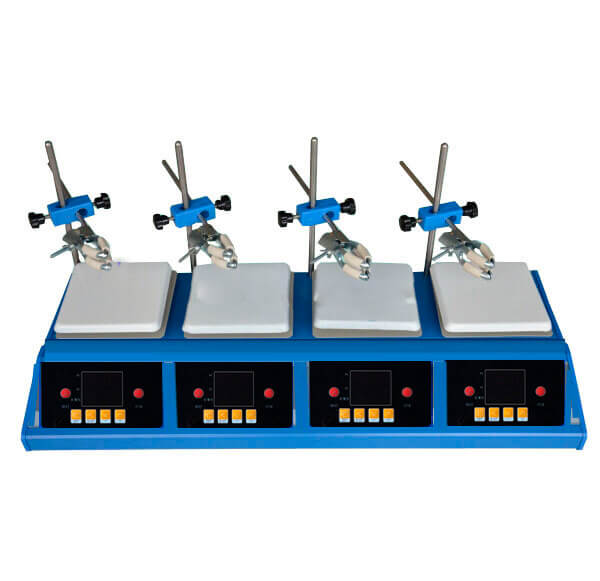
How do ISO/IEC standards influence the selection of Multiposition Intelligent Digital Display Ceramic Hotplate stirrers?
In today's laboratories, adherence to ISO/IEC standards is crucial for ensuring quality, safety, and operational efficiency. Multiposition Intelligent Digital Display Ceramic Hotplate stirrers are widely used in chemical and biological labs. This article delves into how these standards affect the selection process and operational aspects of these devices, making it essential for laboratory professionals to be knowledgeable about compliance and functionality.
Understanding ISO/IEC Standards for Laboratory Equipment
ISO/IEC standards provide a framework for ensuring that laboratory equipment meets specific requirements regarding safety, reliability, and quality. For hotplate stirrers, standards such as ISO 17025 and IEC 61010 play significant roles. ISO 17025 focuses on testing and calibration laboratories, while IEC 61010 pertains to the safety requirements of electrical equipment for measurement, control, and laboratory use. Selecting equipment that complies with these standards ensures that it can perform reliably and safely under typical laboratory conditions.
Key ISO/IEC Standards Relevant to Hotplate Stirrers
Several key standards impact the selection of Multiposition Intelligent Digital Display Ceramic Hotplate stirrers. Understanding these can guide laboratory professionals in making informed decisions regarding their equipment:
- ISO 17025: This standard outlines the general requirements for the competence of testing and calibration laboratories. It emphasizes the importance of equipment calibration, a critical consideration for any laboratory using hotplate stirrers.
- IEC 61010: This standard ensures the safety of electrical equipment used in laboratories, covering aspects such as operational safety and prevention of electrical hazards.
- ISO 15189: Although primarily aimed at medical laboratories, this standard also applies to any laboratory environment requiring quality management practices.
Compliance and Its Importance in Selecting Hotplate Stirrers
Compliance with ISO/IEC standards not only ensures operational safety but also enhances the credibility of laboratory results. Multiposition Intelligent Digital Display Ceramic Hotplate stirrers like the YR02953 and YR02954, for instance, provide digital temperature control and speed adjustments, ensuring consistent mixing at various levels. Compliance with ISO standards means laboratories can confidently calibrate and validate results, thus improving overall laboratory efficiency.
Comparison of Available Models
| Model | ISO/IEC Clauses Covered | Traceability Features | Best For |
|---|---|---|---|
| YR02953 | ISO 17025, IEC 61010 | Digital display, PID control | Small-scale chemical reactions |
| YR02954 | ISO 17025, IEC 61010 | PID control, digital monitoring | Biological sample preparation |
| YR02955 | ISO 17025, IEC 61010 | PID control, digital readouts | Complex multi-sample experiments |
| YR02947 | ISO 17025 | Digital temperature monitoring | General laboratory use |
| YR02948 | ISO 17025 | Temperature control | Field research applications |
| YR02949 | ISO 17025 | Basic monitoring functions | Budget-conscious labs |
Documentation Requirements for Compliance
Maintaining accurate documentation is fundamental for compliance with ISO/IEC standards. Laboratories must ensure that all records pertaining to equipment maintenance, calibration, and operation are meticulously kept. Each model, such as the YR02955, should have a clear calibration record detailing all performed tests, adjustments, and results. Regular audits should be scheduled to ensure compliance and traceability, with documented procedures in place.
Common Mistakes and How to Avoid Them
When selecting Multiposition Intelligent Digital Display Ceramic Hotplate stirrers, laboratory professionals must be aware of common pitfalls that can lead to compliance issues:
- Neglecting Calibration: Ensure that regular calibration protocols are established and followed diligently to meet ISO 17025 compliance.
- Overlooking Documentation: Maintain detailed records of all operational procedures related to the stirrers. This includes calibration logs, maintenance schedules, and operational manuals.
- Ignoring Safety Standards: Always verify that the selected equipment meets IEC 61010 safety requirements to prevent hazards.
Monitoring and Maintenance for Compliance
Effective monitoring and maintenance strategies are essential for ensuring that hotplate stirrers remain compliant with ISO/IEC standards. Implementing a scheduled maintenance plan can help minimize downtime and extend the equipment's lifespan. For instance, ensure that models like the YR02954 undergo regular checks for PID control accuracy, which is vital for temperature consistency in experiments.
Frequently Asked Questions
How do I ensure my Multiposition Intelligent Digital Display Ceramic Hotplate stirrer meets ISO 17025 requirements?
To ensure compliance with ISO 17025, regularly calibrate your hotplate stirrer, like the YR02953, and maintain detailed calibration records. Document all operational parameters and adjustments made during experiments to uphold quality assurance.
What features should I look for in a compliant hotplate stirrer?
When selecting a compliant hotplate stirrer, features such as PID control for temperature accuracy and digital monitoring, as found in the YR02955, are essential. These features help in maintaining consistent performance and reliability under ISO standards.
How can I document compliance for my laboratory equipment?
Documentation should include calibration records, maintenance logs, and user manuals. For models like the YR02954, ensure you track all adjustments made to the temperature settings and stirring speeds to maintain compliance with ISO regulations.
What are the safety requirements for using hotplate stirrers in a lab?
The safety requirements for using hotplate stirrers, outlined in IEC 61010, include having proper electrical insulation and protective casing. Models such as the YR02947 have features designed to protect users from splashes and electrical hazards.
How frequently should I calibrate my hotplate stirrer for regulatory compliance?
Calibration should be performed at least annually or more frequently based on usage and manufacturer recommendations. For instance, the YR02948 may require calibration before critical experiments to ensure accuracy and compliance with ISO standards.
What is the importance of PID control in hotplate stirrers?
PID control is crucial for maintaining precise temperature settings, which is vital for compliance with ISO 17025. Models like the YR02953 utilize PID technology to provide stable and accurate temperature control during experiments.
How do I choose the right hotplate stirrer model for my lab’s needs?
Consider factors such as compliance with relevant ISO/IEC standards, required functionalities, and the specific applications of each model. The YR02955, for example, is best suited for complex multi-sample experiments due to its advanced features.
What are the consequences of non-compliance with ISO/IEC standards in laboratories?
Non-compliance can lead to inaccurate results, potential safety hazards, and loss of accreditation. Ensuring that equipment like the YR02954 meets ISO/IEC standards is essential to uphold laboratory integrity and safety.
If you are looking for a fusion of innovation and quality, you have come to the right place. At Kalstein, we offer you the luxury of exploring our exclusive catalog of laboratory equipment. We manufacture every device to the highest standards of excellence. Our intuitive and seamless online purchasing channels are designed for your convenience, securing the most competitive prices. Hesitate no longer — we bring science to life, it is time to become part of our community.