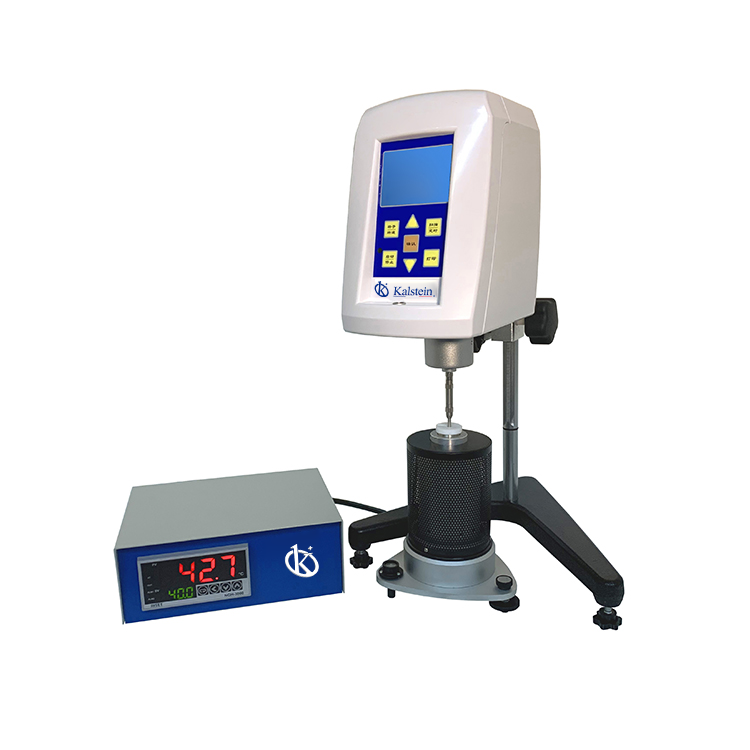
Interpreting Results and Measurement Readings with the YR05844 High Temperature Viscometer
The YR05844 High Temperature Viscometer is a critical tool for laboratories that require precise measurement of viscosity at elevated temperatures. Understanding how to interpret the results from this viscometer is essential for accurate data analysis in various applications. This article delves into the principles of operation, technical specifications, and practical examples to help users maximize the efficiency of the YR05844 in their work.
Understanding Viscosity and Its Importance
Viscosity is a measure of a fluid's resistance to flow. It is crucial in numerous industries, including food, pharmaceuticals, and materials science. The YR05844 is designed to provide accurate viscosity measurements, enabling users to analyze the flow behavior of non-Newtonian fluids under various conditions. The importance of viscosity cannot be understated, as it affects product formulation, processing, and quality control.
Key Technical Specifications of the YR05844
| Parameter | Specification |
|---|---|
| Model | YR05844 |
| Display | Liquid-crystal display |
| Speed (r/min) | 0.5/1/2/2.5/4/5/10/15/20/25/30/40/50/60/70/80/90/100 (total of 18 speeds) |
| Measurement Range (mPa.s) | 3-1.6M for different rotors |
| Test Error | ±3% (Newtonian liquid) |
| Temperature Control Range | Room temperature plus 10℃-250℃ (300℃ optional) |
| Temperature Control Accuracy | 0.1℃ |
Interpreting Results from the YR05844
When utilizing the YR05844, users will encounter various readings that are essential for analysis. The viscometer displays viscosity in mPa.s. A higher viscosity reading indicates a thicker fluid, while a lower reading reflects a thinner fluid. It is crucial to consider the temperature at which the viscosity is measured, as viscosity can change significantly with temperature variations.
Each measurement should be compared against standard viscosity values for the specific fluid being tested. Accurate interpretation also requires understanding the flow behavior: whether the fluid is Newtonian, exhibiting a constant viscosity, or non-Newtonian, where viscosity changes with shear rate. This understanding aids in anticipating how the material will behave during processing.
Best Practices for Accurate Measurement
To ensure the accuracy of viscosity readings with the YR05844, several best practices should be implemented:
- Ensure that the sample volume is sufficient, typically 15-20 ml, for accurate measurements.
- Maintain a consistent measurement time to enhance comparability across experiments.
- Calibrate the instrument regularly to confirm it maintains accuracy over time.
- Utilize the appropriate rotor for the viscosity range being measured to optimize results.
Common Misinterpretations and How to Avoid Them
Interpreting results from the YR05844 can sometimes lead to misinterpretations. Common pitfalls include:
- Ignoring temperature effects: Always note the temperature during measurement, as viscosity can vary widely with temperature.
- Overlooking non-Newtonian behavior: Not all fluids behave like Newtonian fluids; understanding the characteristics of your fluid is critical.
- Failure to compare results against standard values can lead to erroneous conclusions regarding fluid behavior.
Practical Example: Analyzing a Non-Newtonian Fluid
Consider a scenario where a laboratory needs to analyze the viscosity of a polymer solution known to be non-Newtonian. When using the YR05844:
- Choose the correct rotor that corresponds to the expected viscosity range.
- Set the desired temperature according to the specifications of the polymer.
- Begin the measurement, ensuring the sample is adequately mixed to avoid inconsistencies.
- Record the viscosity readings at various shear rates to understand the fluid’s behavior under different conditions.
This approach enables a comprehensive understanding of the polymer's rheological properties and its suitability for intended applications.
Frequently Asked Questions
What is the recommended sample size for the YR05844 High Temperature Viscometer?
The YR05844 requires a small sample volume, typically 15-20 ml, to perform accurate viscosity measurements.
How does temperature affect viscosity readings in the YR05844?
Viscosity is highly dependent on temperature, with many fluids becoming less viscous as temperature increases. It is essential to maintain a consistent temperature during measurements to ensure accurate comparisons.
What types of fluids can the YR05844 measure?
The YR05844 can measure a wide variety of fluids, including Newtonian and non-Newtonian fluids, making it versatile for various applications in laboratories.
How can I ensure the accuracy of the YR05844's measurements?
Regular calibration, maintaining consistent measurement times, and using the correct rotor for the viscosity range are vital to ensuring accurate measurements with the YR05844.
What are the typical error margins for the YR05844?
The YR05844 typically has a test error margin of ±3% for Newtonian liquids, ensuring reliable readings for quality control and analysis.
Can the YR05844 connect to external devices for data logging?
Yes, the YR05844 is equipped with an RS232 interface that allows for direct connection to a microprinter or other data logging devices for enhanced reporting.
How can I request a quote for the YR05844?
You can request a quote for the YR05844 through our inquiry form available on our website.
If you are looking for a fusion of innovation and quality, you have come to the right place. At Kalstein, we offer you the luxury of exploring our exclusive catalog of laboratory equipment. We manufacture every device to the highest standards of excellence. Our intuitive and seamless online purchasing channels are designed for your convenience, securing the most competitive prices. Hesitate no longer — we bring science to life, it is time to become part of our community.