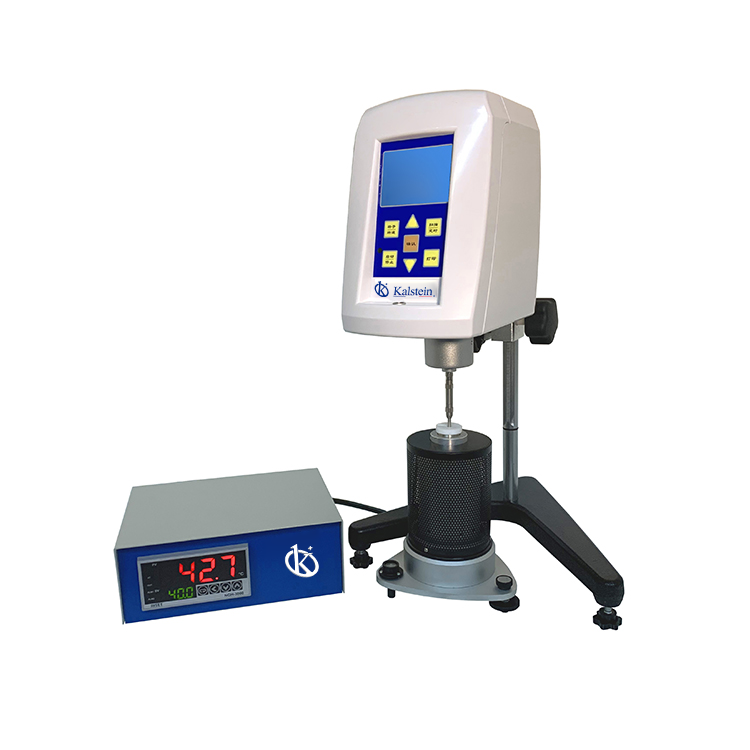
Interpreting Results and Measurement Readings with the YR05843 High Temperature Viscometer
The YR05843 High Temperature Viscometer is a sophisticated instrument designed to provide accurate and reliable viscosity measurements across a wide temperature range. Understanding how to interpret the results and measurement readings from this device is critical for researchers and laboratory technicians. This guide delves into the key aspects of data interpretation, ensuring users can effectively analyze and utilize the information gathered from their experiments.
Understanding the Basics of Viscosity Measurement
Viscosity is a fundamental property of fluids that describes their resistance to flow. The YR05843 measures viscosity by using a coaxial structure, which requires only a small amount of sample, typically between 15-20 ml. The viscometer is capable of operating within a temperature range of ambient temperature plus 10°C to 250°C, with the option for a 300°C oven. Such versatility allows for the examination of various materials under different conditions.
When interpreting viscosity measurements, it’s essential to understand the terms used and the significance of the data. Viscosity is typically expressed in milliPascal-seconds (mPa.s) and can vary significantly based on factors such as temperature and shear rate.
Technical Specifications of the YR05843
| Model | YR05843 | Measurement Range (mPa.s) | Temperature Control Range | Display |
|---|---|---|---|---|
| Display | Liquid-crystal display | |||
| Speed (r/min) | 0.5/1/2/2.5/4/5/10/15/20/25/30/40/50/60/70/80/90/100 (total of 18 speeds) | |||
| Temperature Control Accuracy | 0.1°C | |||
| Print Interface | Yes | |||
Interpreting Measurement Results from the YR05843
When measurements are taken with the YR05843, results are displayed directly on the LCD screen, allowing for immediate reading without secondary calculations. Each measurement is accompanied by precision to two decimal places, providing a clear and accurate representation of viscosity.
To interpret the results, users should familiarize themselves with standard viscosity ranges for the materials being tested. For instance, Newtonian fluids exhibit consistent viscosity regardless of shear rate, whereas non-Newtonian fluids show varying viscosity based on shear conditions. Understanding these distinctions is crucial in data interpretation.
Common Misinterpretations of Viscosity Readings
Misinterpretation of viscosity data can lead to erroneous conclusions about material properties. One common mistake is assuming that a constant viscosity indicates a Newtonian fluid, which is not always the case. Non-Newtonian fluids may appear to have constant viscosity at certain shear rates but behave differently under different conditions.
Another issue arises when comparing results from different viscometers. Variations in calibration, temperature control, and measurement methodologies can lead to discrepancies. It’s vital to be aware of the viscometer's specific calibration and to use standard samples for comparison to ensure consistency in results.
Best Practices for Accurate Measurements
To achieve reliable viscosity readings with the YR05843, there are several best practices to follow:
- Use Appropriate Sample Amount: The YR05843 requires a minimum of 15-20 ml of sample for accurate readings. Ensure that the sample amount is consistent across measurements.
- Maintain Temperature Stability: Rapid and precise temperature control is a feature of the YR05843. Always allow the sample to equilibrate at the desired temperature before taking measurements to avoid fluctuations in viscosity.
- Calibrate Regularly: Regular calibration against standard viscosity samples is essential to maintain the accuracy of the YR05843. This practice helps to ensure that the instrument remains in optimal working condition.
Advanced Data Analysis Techniques
For users looking to perform more in-depth analyses, utilizing software that can connect to the YR05843 via its RS232 interface can facilitate detailed data logging and analysis. Such software allows for the comparison of viscosity readings across different conditions, enhancing the understanding of material behavior.
Advanced techniques may include plotting viscosity against shear rate to visualize non-Newtonian behavior or conducting temperature ramp tests to understand how viscosity changes with temperature. Such analyses can reveal critical insights into material properties and performance.
Frequently Asked Questions
What is the importance of viscosity in laboratory measurements?
Viscosity is crucial in laboratory measurements as it affects the flow behavior of liquids. Understanding viscosity helps in characterizing materials, especially in fields like pharmaceuticals, food science, and materials engineering.
How can I ensure accurate viscosity readings with the YR05843?
To ensure accurate readings with the YR05843, maintain temperature stability, regularly calibrate the instrument, and use a consistent sample amount for measurements.
What does a viscosity measurement error indicate?
A viscosity measurement error can indicate various issues such as improper calibration, sample contamination, or incorrect measurement techniques. Identifying the source of the error is crucial for accurate data interpretation.
Can I use the YR05843 for non-Newtonian fluids?
Yes, the YR05843 is capable of measuring the viscosity of non-Newtonian fluids. However, it is essential to understand the specific behavior of these fluids and how they respond to varying shear rates.
What types of samples can be measured with the YR05843?
The YR05843 can measure a wide range of samples, including both Newtonian and non-Newtonian liquids. It is suitable for various applications in industries such as food, pharmaceuticals, and materials science.
How does temperature influence viscosity readings?
Temperature has a significant effect on viscosity; typically, as temperature increases, viscosity decreases. The YR05843 allows for precise temperature control to study these effects accurately.
How do I interpret the display readings from the YR05843?
The display readings from the YR05843 show viscosity in mPa.s with a precision of two decimal places. Understanding the context of the readings, including the material type and testing conditions, is essential for accurate interpretation.
If you are looking for a fusion of innovation and quality, you have come to the right place. At Kalstein, we offer you the luxury of exploring our exclusive catalog of laboratory equipment. We manufacture every device to the highest standards of excellence. Our intuitive and seamless online purchasing channels are designed for your convenience, securing the most competitive prices. Hesitate no longer — we bring science to life, it is time to become part of our community.