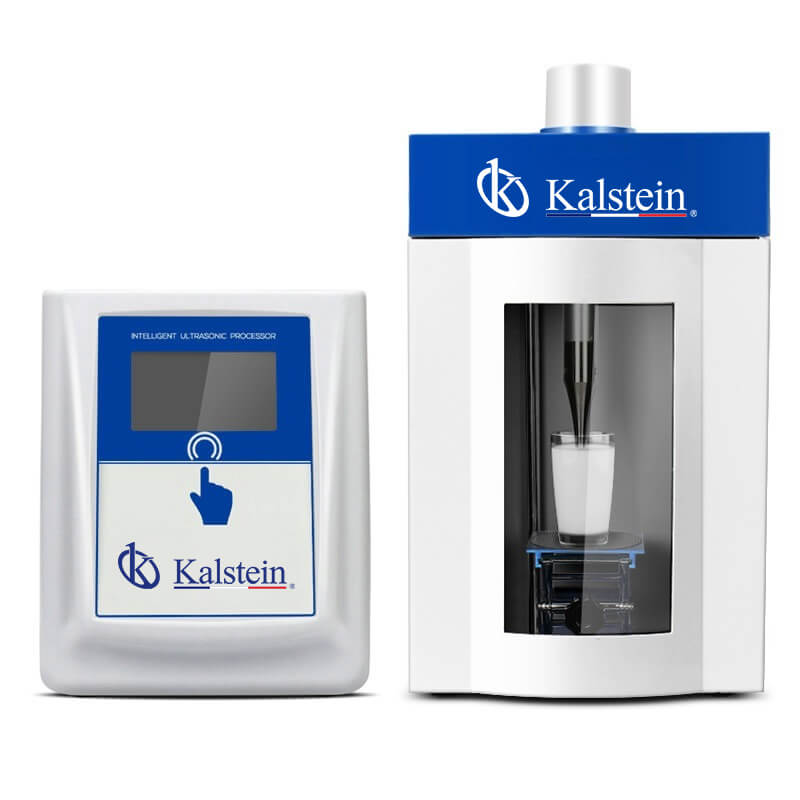
Interpreting Results and Measurement Readings with the YR05832 Ultrasonic Homogenizer
The YR05832 Ultrasonic Homogenizer Processor Sonicator is a versatile tool used in various laboratory applications, from sample homogenization to emulsification and extraction. Proper interpretation of the results it provides is critical for ensuring accurate outcomes in scientific research. This article delves into how to effectively read and interpret measurements from the YR05832, ensuring reliability in your results.
Understanding the Principle of Operation
The YR05832 operates on the principle of ultrasonic cavitation. High-frequency sound waves create microscopic bubbles in liquids, which implode and generate intense shear forces. This action breaks down particles and cells, facilitating homogenization or emulsification. Understanding this principle is essential as it affects how results are interpreted — for instance, the size reduction of particles can be quantified through various measurement techniques.
Technical Specifications of the YR05832
| Specification | Details |
|---|---|
| Model | YR05832 |
| Maximum Power (W) | 900 |
| Ultrasonic Frequency (KHz) | 20-25 |
| Amplitude Control | Variable |
| Included Probes (mm) | 6, 10, 15, 22, 25 |
| Capacity (L) | 0.2-600 |
| Power Supply (V) | 220/110 |
Significance of Measurement Units and Ranges
Correct interpretation of results from the YR05832 involves understanding the measurement units used, which typically include watts for power, kilohertz for frequency, and microns for particle size. Normal ranges for each variable must be established based on laboratory standards and previous experiments. Any deviation from these ranges can indicate issues in processing, necessitating a thorough review of the procedure.
Common Misinterpretations in Measurements
Interpreting results from the YR05832 can lead to misinterpretations if the operator is not careful. For instance, assuming that reduced particle size directly correlates to improved homogenization can be misleading without considering the application context. Operators must analyze the data comprehensively, considering factors such as sample type and desired outcome. A detailed approach helps avoid common pitfalls in data interpretation.
Worked Examples of Result Interpretation
To further clarify how to interpret results from the YR05832, let's consider a few examples:
- Example 1: After processing a bacterial culture, the resultant particle size distribution shows a significant decrease in size from 10 microns to 1 micron. This suggests effective cell lysis, which is desirable for subsequent DNA extraction.
- Example 2: When emulsifying oil and water, the resulting mixture shows a phase separation after a short duration. This indicates inadequate emulsification, prompting a review of processing parameters like time and power settings.
Developing a Consistent Protocol for Measurement Interpretation
Establishing a consistent protocol for interpreting results from the YR05832 enhances reliability. This includes defining expected outcomes, documenting all processing parameters, and regularly calibrating the equipment. A systematic approach helps in identifying trends over time, improving both accuracy and reproducibility of results.
Frequently Asked Questions
What are the key indicators of successful homogenization with the YR05832?
Key indicators include the reduction in particle size, uniformity of the sample, and stability of the emulsion or solution post-processing. Visual inspection and particle size analysis can provide additional confirmation.
How can one troubleshoot inconsistent readings from the YR05832?
Inconsistent readings may arise from improper calibration, faulty probes, or incorrect operating conditions. Regular checks of equipment calibration and maintenance of probes can help mitigate these issues.
What external factors can influence YR05832 results?
Temperature, viscosity of the sample, and the presence of air bubbles can significantly affect homogenization outcomes. Maintaining controlled conditions is crucial for reliable results.
How do I calibrate the YR05832 for accurate measurements?
Calibration involves setting the ultrasonic frequency and power output according to the manufacturer’s specifications. Regular maintenance and validation against standard references are recommended.
Are there specific applications where the YR05832 excels?
The YR05832 is particularly effective in biotechnology for cell disruption, in pharmaceuticals for emulsification, and in food processing for creating stable mixtures.
What safety measures should be taken when operating the YR05832?
Operators should wear appropriate personal protective equipment, ensure the area is well-ventilated, and follow operational guidelines to prevent exposure to ultrasonic waves.
How can I ensure reproducibility in my measurements with the YR05832?
Reproducibility can be enhanced by maintaining consistent operational parameters, thorough documentation of experiments, and regular calibration of the equipment.
To request a quote on the YR05832 Ultrasonic Homogenizer, please contact us today!
If you are looking for a fusion of innovation and quality, you have come to the right place. At Kalstein, we offer you the luxury of exploring our exclusive catalog of laboratory equipment. We manufacture every device to the highest standards of excellence. Our intuitive and seamless online purchasing channels are designed for your convenience, securing the most competitive prices. Hesitate no longer — we bring science to life, it is time to become part of our community.