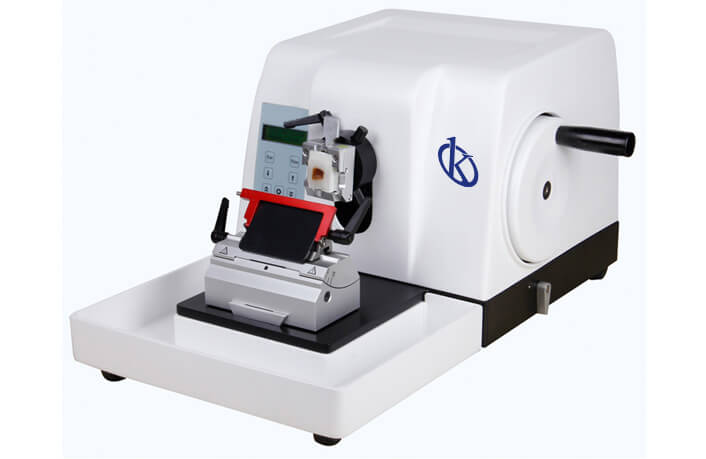
Interpreting Results and Reading Measurements with the YR416 Semi-Automatic Rotary Microtome
The YR416 Semi-Automatic Rotary Microtome stands out as a critical instrument in the field of pathology, enabling precise sectioning of samples for microscopic analysis. Understanding how to interpret results and read measurements from the YR416 is essential for operators seeking accurate and reproducible results.
Understanding the Importance of Accurate Measurements
Accurate measurements are fundamental in any laboratory setting, especially in pathology where sample analysis can affect diagnostic outcomes. The YR416 offers a cutting-edge approach to sectioning specimens, ensuring that the thickness of each slice is controlled and reproducible. This precision is vital for histological examination, where even minor discrepancies can lead to misinterpretation of the results.
The YR416 allows for a section thickness range from 0.25 μm to 60 μm, enabling it to cater to various sample types and requirements. Understanding how to set and interpret these measurements is critical for obtaining valid results.
Technical Specifications of the YR416
| Specification | Details |
|---|---|
| Model | YR416 |
| Minimum Cutting Thickness | 0.25 μm |
| Horizontal Feed | 28 mm |
| Vertical Sample Stroke | 52 mm |
| Sample Holder Rotation | 360 degrees |
| Blade Holder Base Movement Range | 0-60 mm (forwards and backwards) |
| Pressing Plate Movement Range | 0-23 mm |
| Sample Clamp Rotation | 360 degrees |
| Sample Orientation | XY-8° |
| Maximum Sample Size | 50 × 70 mm |
| Precision Error | ±1% |
| Operating Voltage | CA 220V±10% 50Hz; CA110V±10% 60Hz |
| Power | 100W |
| Dimensions | 580 × 410 × 305 mm |
| Net Weight | 29 kg |
Interpreting Section Thickness Measurements
The section thickness achieved using the YR416 is a critical factor in ensuring successful analysis. The microtome allows for fine adjustments in thickness, which is important for different analytical needs. To interpret the results correctly, operators should understand the implications of each thickness range.
For instance, thinner sections (around 0.25 μm) are often necessary for visualizing fine cellular details, while thicker sections may be more suitable for general morphology studies. Operators must also be aware of the error margin specified at ±1% when setting the thickness, ensuring that they account for this in their analysis.
Common Misinterpretations in Results
Operators can encounter challenges when interpreting data from the YR416. Common misinterpretations can stem from not understanding the significance of section thickness or failing to recognize the implications of sample preparation on results. For instance, overly thick sections may obscure critical cellular details, leading to incorrect conclusions.
To mitigate these issues, operators should ensure they are familiar with the appropriate sectioning procedures and the impact of specimen type on the results. Regular training and review of best practices can help in avoiding these pitfalls.
Reading Display Outputs and Printouts
The YR416 provides visual outputs that are essential for monitoring and verifying measurements. Understanding how to read these displays can significantly enhance the accuracy of sample analysis. Operators should familiarize themselves with the display interface, focusing on key indicators such as section thickness, feed rate, and operational status.
Additionally, maintaining a log of printouts can help in identifying trends over time, further enhancing the interpretative process. Operators should be guided by established protocols for documenting and reviewing outputs to support robust data interpretation.
FAQs
What is the maximum sample size compatible with the YR416?
The maximum sample size that the YR416 can accommodate is 50 × 70 mm, which allows for substantial versatility in sample selection.
How does the error margin affect sectioning results?
The YR416 has a precision error margin of ±1%, meaning that operators should allow for slight variances in section thickness. It is crucial for accurate data analysis and should be considered during interpretation.
What are common section thicknesses used in pathology?
In pathology, common section thicknesses range from 3 μm to 5 μm for routine histology, while finer sections (e.g., 0.25 μm) may be employed for specialized studies requiring high detail.
How can I prevent misinterpretation of results?
Preventing misinterpretation involves understanding the implications of section thickness, maintaining proper sample preparation protocols, and being familiar with the display readings of the YR416.
What training is recommended for using the YR416?
Regular training focused on microtome operation, sectioning techniques, and data interpretation is recommended to ensure accurate results from the YR416.
Are there any specific maintenance tips to ensure accuracy?
Regular maintenance, including calibration checks and cleaning, is essential to keep the YR416 performing optimally and producing reliable results.
Conclusion
Understanding how to interpret results and read measurements from the YR416 Semi-Automatic Rotary Microtome is vital for achieving the highest quality outcomes in laboratory settings. The precision and versatility of this microtome make it an indispensable tool in pathology and various applications. Regular training and adherence to established protocols will ensure that operators can maximize the capabilities of the YR416.
If you are looking for a fusion of innovation and quality, you have come to the right place. At Kalstein, we offer you the luxury of exploring our exclusive catalog of laboratory equipment. We manufacture every device to the highest standards of excellence. Our intuitive and seamless online purchasing channels are designed for your convenience, securing the most competitive prices. Hesitate no longer — we bring science to life, it is time to become part of our community.