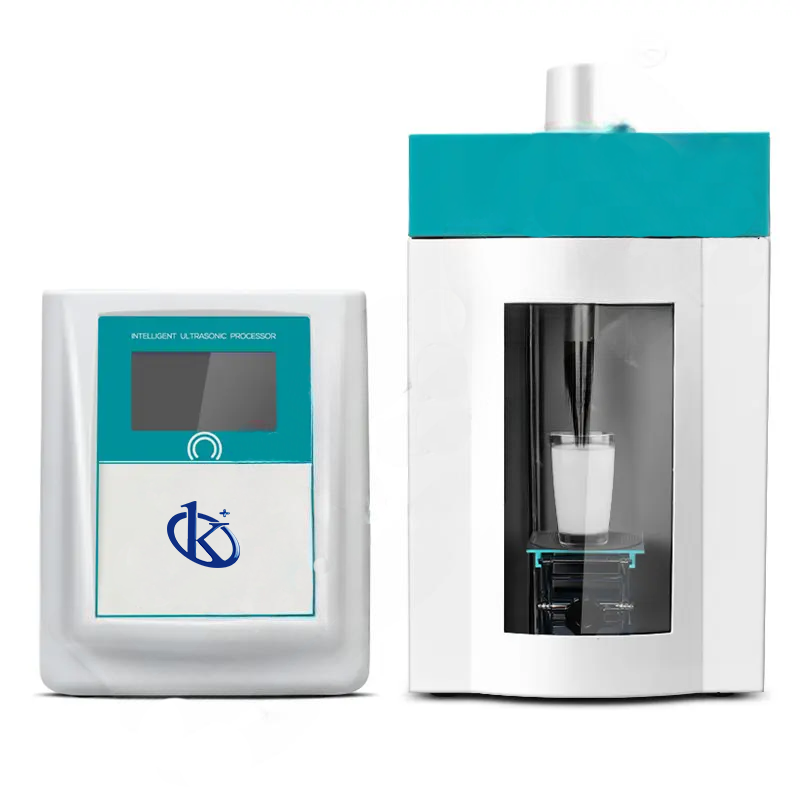
Integrating Ultrasonic Homogenizers with LIMS: Optimizing Data Flow in Laboratories
In today's laboratories, the integration of equipment with Laboratory Information Management Systems (LIMS) is no longer optional; it is essential for maintaining efficiency and accuracy in data handling. This article focuses on ultrasonic homogenizers, exploring how they can be effectively integrated with LIMS to enhance data flow and overall laboratory performance.
Understanding Ultrasonic Homogenizers in the Context of LIMS
Ultrasonic homogenizers play a significant role in various laboratory processes, such as sample preparation and emulsification. Their operation relies on ultrasonic waves to create cavitation bubbles, which help in mixing and dispersing materials on a micro-level. When integrated with LIMS, these devices can streamline data management tasks such as sample tracking, result documentation, and compliance reporting.
Key Benefits of LIMS Integration
Integrating ultrasonic homogenizers with LIMS allows for automated data capture, reducing manual entry errors. It also facilitates real-time monitoring of experiments, which is crucial for maintaining compliance with industry standards. Enhanced traceability of samples through electronic records ensures that laboratories meet required regulatory requirements efficiently.
Comparison of Available Models
| Model | Power (W) | Mixing Capacity (ml) | Frequency Range (KHz) | Integration Effort | Best for |
|---|---|---|---|---|---|
| YR05015 | 1.5 – 150 | 0.1 – 150 | 20 – 25 | Moderate | Small to medium labs |
| YR05016 | 2-5 – 250 | 0.1 – 300 | 20 – 25 | High | Medium labs handling diverse samples |
| YR05017 | 10 – 650 | 0.1 – 500 | 20 – 25 | Moderate | Complex sample preparation |
| YR05018 | 10 – 900 | 0.1 – 600 | 20 – 25 | Moderate | Higher throughput needs |
| YR05019 | 20 – 1,200 | 1 – 1,000 | 20 – 25 | High | Large volume applications |
| YR05020 | 50 – 1,800 | 1 – 1,200 | 20 – 25 | High | Extensive research projects |
Optimizing Data Workflow in Laboratories
To optimize data workflows, it is essential to understand the connectivity protocols suitable for ultrasonic homogenizers and LIMS. Protocols such as ASTM and HL7 facilitate seamless integration between devices and software systems. By implementing these protocols, laboratories can ensure that data flows smoothly, enhancing productivity and reducing the risk of errors.
Data Capture and Documentation
Effective documentation practices are critical when integrating ultrasonic homogenizers with LIMS. Automated data capture systems associated with these devices minimize human error and maintain accurate records of experiments. Laboratories must adhere to best practices in data documentation to ensure compliance with regulatory standards such as ISO 17025.
Common Mistakes and How to Avoid Them
When integrating ultrasonic homogenizers with LIMS, laboratories often make mistakes that can hinder efficiency. A common error is not adequately training personnel on system functionalities, leading to improper usage. To mitigate this risk, comprehensive training sessions should be conducted, focusing on both LIMS functionalities and the operation of ultrasonic homogenizers.
Frequently Asked Questions
What are the essential features of ultrasonic homogenizers for LIMS integration?
Essential features include automated data capture, control over ultrasonic parameters, and compatibility with common protocols. Models like YR05019 offer extensive mixing capacities and power, making them suitable for diverse applications while ensuring seamless data integration.
How can I ensure my ultrasonic homogenizer meets compliance standards?
To ensure compliance, choose models that offer features like temperature monitoring and data logging. The YR05015, for instance, includes PID control and automatic failure alerts, which help maintain compliance with standards such as ISO 17025.
What are the connectivity options for ultrasonic homogenizers in a LIMS environment?
Connectivity options typically include USB and Ethernet for direct communication with LIMS. Most advanced models like YR05020 support these connections, enabling easy integration for data transfer.
Which protocols are best for integrating ultrasonic homogenizers with LIMS?
Protocols such as REST and ASTM are ideal for facilitating the exchange of data between ultrasonic homogenizers and LIMS. For example, the YR05016 can easily adapt to various protocols for efficient integration.
How does LIMS integration improve workflow efficiency in laboratories using ultrasonic homogenizers?
LIMS integration improves workflow by automating data collection and minimizing manual errors. Using models like YR05018, laboratories can track samples efficiently, increasing throughput and reducing processing time.
What challenges can arise during the integration of ultrasonic homogenizers with LIMS?
Challenges often include software compatibility issues and personnel resistance to new systems. However, by selecting flexible models like YR05017 and providing adequate training, laboratories can overcome these hurdles effectively.
How much can I expect to pay for a high-performance ultrasonic homogenizer?
High-performance ultrasonic homogenizers range from $756 for the YR05015 to about $2058 for the YR05020, depending on features and capabilities essential for your laboratory's needs.
What role does user training play in the successful implementation of LIMS integration?
User training is critical for successful implementation; it ensures that laboratory personnel can effectively utilize both LIMS and ultrasonic homogenizers. Investing in training can significantly enhance data accuracy and operational efficiency.
If you are looking for a fusion of innovation and quality, you have come to the right place. At Kalstein, we offer you the luxury of exploring our exclusive catalog of laboratory equipment. We manufacture every device to the highest standards of excellence. Our intuitive and seamless online purchasing channels are designed for your convenience, securing the most competitive prices. Hesitate no longer — we bring science to life, it is time to become part of our community.