Integrating Salinity Refractometers with LIMS: Enhancing Data Workflows
The integration of salinity refractometers with Laboratory Information Management Systems (LIMS) represents a pivotal advancement in laboratory data management. This integration not only facilitates seamless data transfer but also enhances accuracy and efficiency within laboratory workflows. As laboratories seek to optimize their operations, understanding the specific benefits and functionalities of various salinity refractometer models becomes essential.
Understanding Salinity Refractometers in the Context of LIMS Integration
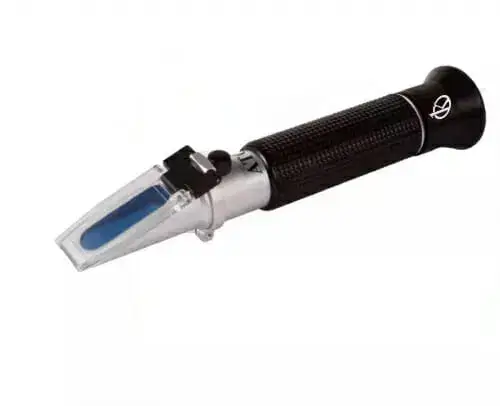
Salinity refractometers are critical tools used in laboratories to measure the concentration of salt in water. They provide essential data for quality control in clinical, research, and marine industries. Integrating these devices with LIMS enables laboratories to automate data collection and improve traceability, ultimately leading to enhanced decision-making processes.
In the context of digital data workflows, salinity refractometers can be utilized to monitor the salinity levels of samples continuously. This real-time data can be fed into a LIMS, allowing for instantaneous analysis and reporting. The key is to ensure that the refractometers selected support the necessary connectivity protocols for seamless integration.
Comparison of Available Models
| Model | Measurement Range | Accuracy | Best Used For |
|---|---|---|---|
| YR05887 | Salinity: 2-4% (20-40 ppt) | ±0.1% (1 ppt) | Quality control in marine industries |
| YR05888 | Salinity: 0-4% (0-40 ppt) | ±0.1% (1 ppt) | Clinical laboratory analysis |
| YR05913 | Salinity: 2-4% (20-40 ppt) | ±0.1% (1 ppt) | Research applications in marine biology |
| YR05914 | Salinity: 0-4% (0-40 ppt) | ±0.1% (1 ppt) | Environmental testing |
Connectivity Protocols for LIMS Integration
For effective LIMS integration, it is crucial to understand the connectivity protocols utilized by different salinity refractometer models. Protocols such as HL7 and ASTM enable the efficient transfer of data from the refractometers to the LIMS. Ensuring compatibility with these protocols can significantly reduce the integration effort and time.
When selecting a salinity refractometer, consider those that offer bi-directional communication capabilities. This allows not only for data export to the LIMS but also for commands or settings adjustments to be sent back to the refractometer, thus enhancing overall functionality.
Data Sovereignty and Compliance
Data sovereignty refers to the concept that data is subject to the laws and governance structures within the nation it is collected. In laboratory settings, integrating salinity refractometers with LIMS must comply with specific regional laws regarding data handling and storage. For example, laboratories operating under stringent regulatory frameworks should ensure their chosen models adhere to applicable standards.
Using models such as YR05887 and YR05888 ensures that compliance with standards like ISO/IEC 17025 is achievable, as these instruments allow for accurate measurements that can be well documented within the LIMS.
Common Mistakes and How to Avoid Them
Laboratories often encounter challenges when integrating salinity refractometers with LIMS. Common mistakes include selecting models without proper compatibility with existing systems, overlooking the need for adequate training on the new processes, and failing to establish a clear data management protocol.
To avoid these pitfalls, laboratories should conduct a thorough analysis of current systems, aim for user-friendly models like the YR05914 that facilitate easy integration, and provide training sessions for staff on new workflows.
Best Practices for Data Management in Integrated Systems
Once integrated, maintaining the salinity refractometers and LIMS requires adherence to best practices. Regular calibration of the refractometers is essential to ensure data accuracy. Establishing scheduled calibration routines and maintaining records within the LIMS can aid in compliance and auditing processes.
Moreover, laboratories should adopt standardized operating procedures that align with both their LIMS and the specifications of the salinity refractometers being used. This includes setting up automated alerts for data discrepancies and regular training refreshers for staff.
Frequently Asked Questions
How does LIMS integration improve data accuracy for salinity refractometers?
LIMS integration enhances data accuracy by automating data transfer from salinity refractometers like YR05888, reducing human error in manual entry and ensuring real-time monitoring of salinity levels.
What are the key connectivity protocols for integrating salinity refractometers with LIMS?
Key connectivity protocols include HL7 and ASTM, which facilitate seamless data transfer between salinity refractometers such as YR05914 and laboratory information systems.
Which salinity refractometer model is best for environmental testing with LIMS?
The YR05914 model is well-suited for environmental testing, as it offers accurate salinity measurements that can be integrated with LIMS for comprehensive data management.
What are the compliance standards for salinity measurements in integrated systems?
Compliance standards like ISO/IEC 17025 ensure accuracy in salinity measurements from refractometers, such as YR05887, while integrating with LIMS for better traceability.
How can laboratories avoid common mistakes during LIMS integration?
Laboratories can avoid common mistakes by thoroughly assessing existing systems, selecting compatible models like YR05888, and providing staff training on new workflows.
What benefits does real-time data monitoring provide in LIMS-integrated systems?
Real-time data monitoring allows for instant analysis of salinity levels from refractometers like YR05913, leading to timely decision-making and improved laboratory efficiency.
How does data sovereignty affect LIMS integration for salinity refractometers?
Data sovereignty affects LIMS integration by requiring compliance with local laws governing data storage and handling, which can be achieved with models like YR05888 that support proper documentation.
What role does calibration play in LIMS-integrated salinity measurement systems?
Calibration is vital for maintaining data accuracy in LIMS-integrated systems, ensuring salinity refractometers like YR05914 provide reliable measurements essential for compliance and quality control.
If you are looking for a fusion of innovation and quality, you have come to the right place. At Kalstein, we offer you the luxury of exploring our exclusive catalog of laboratory equipment. We manufacture every device to the highest standards of excellence. Our intuitive and seamless online purchasing channels are designed for your convenience, securing the most competitive prices. Hesitate no longer — we bring science to life, it is time to become part of our community.