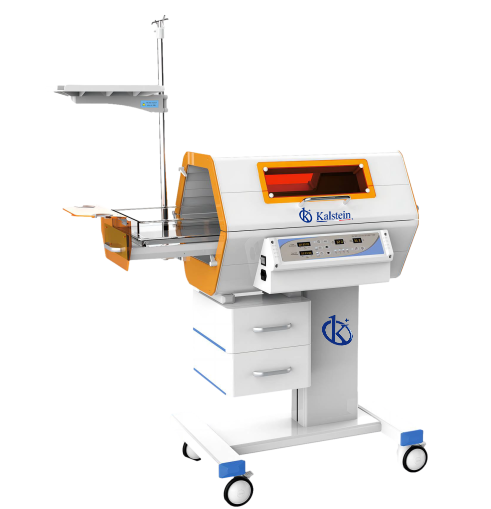
Infant Phototherapy Unit YR06223: A Comprehensive Specification Comparison
Product Description
The Infant Phototherapy Unit YR06223 is designed for effective treatment of neonatal jaundice, providing a compact size, lightweight design, and high irradiation output. Equipped with a blue LED light source, it ensures uniform and efficient light distribution, which is critical for effective phototherapy. The unique 360-degree dual-sided circle allows for more effective radiation, ensuring optimal treatment from both sides.
This unit offers two distinct phototherapy modes: upward lateral phototherapy and downward lateral phototherapy, which can be utilized independently based on specific therapeutic needs. The electronic ballast provides adaptable power supply and high power factor, ensuring consistent performance.
The therapy duration is displayed separately for both upper and lower light therapy sessions. Additionally, it automatically records each therapy duration and total therapy time, facilitating easy monitoring of treatment progress.
Temperature monitoring is critical in phototherapy; thus, the YR06223 features independent displays for air and skin temperatures. Other safety features include a shutdown memory, alarm sync key, lock key, and automatic self-examination function. The unit is equipped with four alarm functions for added safety: power failure, probe failure, over-temperature, and fan failure.
Convenience is enhanced with observation ports on both sides for easy monitoring of the infant during therapy. The pneumatic spring structure enables easy opening and closing of the canopy. The base is crafted from an aluminum-magnesium alloy, featuring two drawers and a tray for storage.
Market Price
The market price for the Infant Phototherapy Unit YR06223 is typically around $2485.00 USD. This price may vary slightly based on the supplier and any additional features or warranties offered. It is important to compare prices from different vendors to ensure the best deal.
| Specification | YR06223 |
|---|---|
| Model | YR06223 |
| Power Supply | AC220V±10%, 50Hz±2% |
| Power Input | ≤400VA |
| Blue Light Wavelength | 420nm~490nm |
| Circle 360 Light Radiation | 3700μW/cm2 |
| Up Side Light Radiation | 3300μW/cm2 |
| Down Side Light Radiation | 2400μW/cm2 |
| Life Span of Blue Light Tube | ≥20000 hours |
| Air Temperature Display Range | 0-45.0°C |
| Skin Temperature Display Range | 0-45.0°C |
| Time Accuracy | 1min/2h |
| Count-up Time Range | 0-99.9 hours |
| Count-down Time Range | 1min~99.9 hours |
| Total Cumulative Time | 0-999999 hours |
| Mattress Size | 613×300mm |
| Ambient Temperature | 18°C ~ 30°C |
| Relative Humidity | 30%~75% |
| Atmospheric Pressure | 700hpa~1060hpa |
Frequently Asked Questions
What is the purpose of an infant phototherapy unit?
An infant phototherapy unit is primarily used to treat neonatal jaundice by exposing the infant to specific wavelengths of light that help reduce bilirubin levels in the blood.
How does the YR06223 compare to other phototherapy units?
The YR06223 offers high light output, dual phototherapy modes, and extensive safety features, making it highly competitive in the market compared to other models.
What are the safety features included in the YR06223?
The unit has multiple safety features such as alarm functions for power failure, probe failure, over-temperature, and fan failure, ensuring the safety of the infant during treatment.
How long can the blue light tube last?
The blue light tube in the YR06223 has a lifespan of over 20,000 hours, ensuring longevity and reliable performance over time.
Is temperature monitoring available in the YR06223?
Yes, the unit provides separate displays for both air and skin temperatures to ensure that the infant remains within safe temperature ranges during treatment.
What is the weight of the YR06223 unit?
The gross weight of the YR06223 unit is approximately 80 kilograms, which is standard for phototherapy units of this kind.
Can I request a quote for the Infant Phototherapy Unit YR06223?
Yes, please get in touch with our team to request a quote for the unit, ensuring you find the best price for your needs.
Pros and Cons
Pros:
- Compact size and lightweight design for easy handling.
- Dual phototherapy modes enhance treatment flexibility.
- High light output ensures effective therapy.
- Extensive safety features for infant protection.
- Temperature monitoring for ensuring optimal treatment conditions.
Cons:
- Market price may be a consideration for budget-conscious buyers.
- Requires regular maintenance to ensure optimal performance.
Field Usage
The Infant Phototherapy Unit YR06223 is widely utilized in neonatology departments of hospitals and clinics, particularly in settings where jaundice is prevalent among newborns. Due to its versatility and high efficiency, it is suited for both inpatient and outpatient care environments.
Healthcare professionals appreciate its ease of use, safety features, and effectiveness in treating conditions associated with elevated bilirubin levels.
Recommendations
When considering the purchase of an infant phototherapy unit, it is essential to evaluate your specific needs, including:
- The volume of patients requiring treatment.
- Available space for equipment placement.
- Budget constraints and potential financing options.
- Required safety and monitoring features for patient protection.
Choosing the YR06223 can be a wise investment, given its advanced features and proven reliability in clinical settings. For a complete understanding and to ensure the best purchasing decision, don't hesitate to explore further options available on our platform.
If you are looking for a fusion of innovation and quality, you have come to the right place. At Kalstein, we offer you the luxury of exploring our exclusive catalog of laboratory equipment. We manufacture every device to the highest standards of excellence. Our intuitive and seamless online purchasing channels are designed for your convenience, securing the most competitive prices. Hesitate no longer — we bring science to life, it is time to become part of our community.