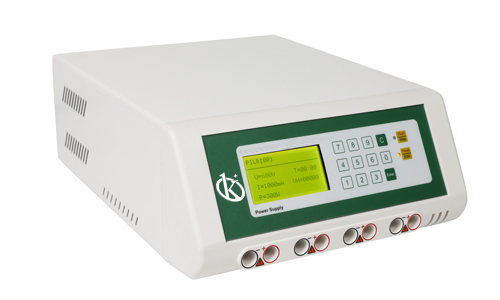
High-Voltage Power Supply: Best Practices and Applications in 2026
What is it used for in 2026
In 2026, high-voltage power supplies are primarily utilized in various laboratory applications, ranging from electrochemical processes to electrophoresis. These devices provide precise voltage and current control, essential for experiments requiring specific electrical conditions. Laboratory professionals use these power supplies for applications such as:
- Electrophoresis: Separating molecules based on their size and charge.
- Plasma generation: Facilitating reactions or processes in plasma physics research.
- Material testing: Assessing the conductivity and physical properties of materials under high voltage.
The need for accuracy, reliability, and safety in these applications drives the evolution of high-voltage power supplies in modern laboratories.
History and evolution of the technology
The development of high-voltage power supplies can be traced back to the early 20th century when researchers began to explore the effects of high voltage in various scientific fields. Over the decades, advancements in semiconductor technology and microprocessor control have allowed for significant improvements in precision and control. Modern high-voltage power supplies now incorporate:
- Touchscreen interfaces for ease of operation.
- Microprocessor-controlled systems enabling real-time monitoring and adjustments.
- Advanced safety features to prevent overloads and short circuits.
This evolution reflects the growing complexity of laboratory experiments and the need for equipment that can adapt to various research demands.
How to use it step by step
Using a high-voltage power supply requires careful attention to detail and adherence to safety protocols. Follow these steps for effective use:
- Preparation: Ensure the workspace is clear and the area is secure. Review safety protocols for working with high voltage.
- Setup: Connect the high-voltage power supply to the appropriate output terminals. Verify that all connections are secure.
- Configuration: Set the desired voltage and current parameters on the device’s interface. Use preset methods if available.
- Testing: Conduct a preliminary test with the equipment disconnected from the load to ensure the settings are correct.
- Operation: Connect the load and gradually increase the voltage to the set level while monitoring performance.
- Monitoring: Continuously observe the device for any alerts or malfunctions during operation.
- Shutdown: Once the experiment is complete, safely disconnect the load and power down the unit.
Careful adherence to these steps will enhance safety and ensure optimal performance.
Best techniques and protocols
In 2026, employing best techniques and protocols is essential for maximizing the efficacy of high-voltage power supplies. Key practices include:
- Regular Calibration: Ensure that the power supply is calibrated according to the manufacturer’s specifications to maintain accuracy.
- Safe Handling Procedures: Always adhere to safety guidelines during setup and operation to minimize risks associated with high voltage.
- Documentation: Keep detailed records of experiments, including voltage settings, current levels, and configurations for future reference.
- Training: Ensure that all personnel involved in using high-voltage equipment are adequately trained and aware of safety measures.
By implementing these techniques, laboratory professionals can enhance both safety and efficiency in their operations.
Practical applications by laboratory type
Different laboratory types utilize high-voltage power supplies in various ways. Here are the applications categorized by laboratory type:
- Research Laboratories: Used for fundamental research in physics and chemistry, including plasma physics and material studies.
- Clinical Laboratories: Employed in electrophoresis for separating proteins and nucleic acids in diagnostic testing.
- Industrial Laboratories: Used for quality control in manufacturing processes, such as testing the dielectric strength of materials.
- Academic Laboratories: Used in educational settings for teaching principles of electricity and electrochemistry.
Understanding these applications helps tailor the use of high-voltage power supplies to specific laboratory needs.
Regulations, standards and certifications
In operating high-voltage power supplies, compliance with relevant regulations and standards is crucial. Important standards include:
- IEC 61010: Safety requirements for electrical equipment for measurement, control, and laboratory use.
- ISO 9001: Quality management systems ensuring consistent quality in manufacturing and service delivery.
- CE Marking: Indicates conformity with health, safety, and environmental protection standards for products sold within the European Economic Area.
Adhering to these regulations not only ensures legal compliance but also guarantees safety and reliability in laboratory operations.
Comparison with alternative technologies
When considering high-voltage power supplies, it is essential to compare them with alternative technologies:
- Transformers: Often used for voltage conversion but lack the precise control modern power supplies offer.
- Linear Power Supplies: Provide stable voltage outputs but can be less efficient than switching power supplies.
- Batteries: Offer portability but typically cannot deliver the high voltages required for most laboratory applications.
High-voltage power supplies excel in precision, control, and safety, making them the preferred choice for many laboratory applications.
Comparison of available models
| Model | Best for | Key specs | Recommended use case |
|---|---|---|---|
| YR03409 | Versatile applications with programmable methods | Output: 20–3000 V, 1–200 mA, 1–200 W | Ideal for complex electrophoresis tasks requiring temperature control |
| YR03408 | Advanced electrophoresis with extensive programming options | Output: 20–5000 V, 1–200 mA, 1–100 W | Suitable for detailed research requiring multiple operational modes |
| YR03405 | Standard electrophoresis applications | Output: 10–600 V, 1–500 mA, 1–300 W | Best for educational purposes and basic research setups |
| YR03406 | Controlled experiments with low to medium voltage needs | Output: 20–1600 V, 1–100 mA, 1–160 W | Useful for applications in material testing and analysis |
| YR03407 | High current applications | Output: 20–3000 V, 1–400 mA, 1–400 W | Recommended for industrial testing and development projects |
Common mistakes and how to avoid them
Using high-voltage power supplies comes with potential pitfalls. Common mistakes include:
- Neglecting Safety Protocols: Always follow safety guidelines to avoid accidents.
- Incorrect Settings: Double-check voltage and current settings before operation to prevent equipment damage.
- Ignoring Calibration: Regularly calibrate equipment to ensure accurate measurements.
- Lack of Documentation: Keep thorough records of experiments and equipment settings for reproducibility.
By recognizing and addressing these common errors, laboratory professionals can enhance safety and efficiency.
Maintenance, calibration and good practices 2026
In 2026, maintaining a high-voltage power supply involves the following practices:
- Regular Maintenance: Schedule regular maintenance checks to ensure components are in good working condition.
- Calibration: Perform calibration according to the manufacturer's instructions at defined intervals to maintain performance.
- Environmental Considerations: Keep the equipment in an appropriate environment, avoiding extreme temperatures and humidity.
- Training: Provide training for all staff on the proper use and maintenance of equipment to minimize risks.
Implementing these practices will prolong the life of the equipment and maintain its reliability.
Cost-benefit analysis 2026
When evaluating high-voltage power supplies, consider both initial costs and long-term benefits:
- Initial Investment: Prices for high-voltage power supplies can range significantly based on specifications and features offered.
- Operational Efficiency: Higher efficiency can result in lower operational costs over time.
- Versatility: Multifunctional devices can replace multiple single-function units, reducing overall expenses.
- Safety Features: Enhanced safety reduces the risk of accidents, potentially lowering insurance costs.
Conducting a thorough cost-benefit analysis will guide laboratories in making informed purchasing decisions.
Frequently asked questions
What should I consider when choosing a high-voltage power supply?
Consider the voltage and current requirements of your applications, the available features such as programmability and control, and ensure that the device complies with safety standards relevant to your work.
How often should I calibrate my high-voltage power supply?
Calibration should be performed regularly, typically every six months or after significant use, to ensure measurements remain accurate.
Can I use a high-voltage power supply for multiple applications?
Yes, many high-voltage power supplies are designed for versatility and can be configured for various applications, including electrophoresis and testing.
What safety precautions should I take when using high-voltage equipment?
Always wear appropriate personal protective equipment, ensure a safe workspace, and follow all manufacturer guidelines and safety protocols during operation.
How do I troubleshoot common issues with high-voltage power supplies?
Check connections, review settings, and consult the user manual for error codes. If problems persist, contact the manufacturer for support.
Are there specific maintenance practices recommended for high-voltage power supplies?
Regular maintenance checks, environmental control, and training staff on proper use and care are essential to keeping high-voltage power supplies operating effectively.
Where can I request a quote for high-voltage power supplies?
You can request a quote through various online platforms that offer laboratory equipment, ensuring you get the best prices and options available.
If you are looking for a fusion of innovation and quality, you have come to the right place. At Kalstein, we offer you the luxury of exploring our exclusive catalog of laboratory equipment. We manufacture every device to the highest standards of excellence. Our intuitive and seamless online purchasing channels are designed for your convenience, securing the most competitive prices. Hesitate no longer — we bring science to life, it is time to become part of our community.