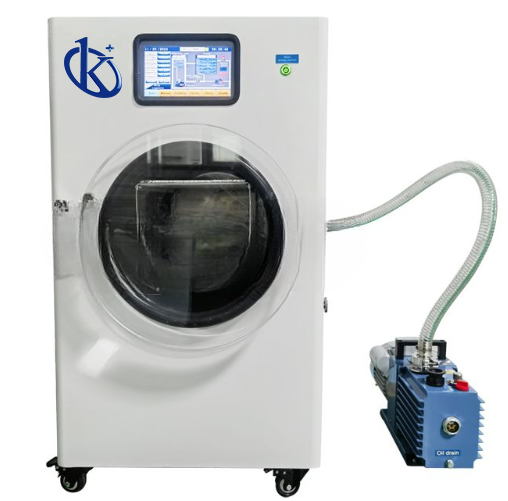
How Energy Sustainability and Environmental Footprint Reduction Shape Food Freeze Dryers
The increasing need for energy sustainability and minimizing environmental footprint has become critical in laboratory operations, especially concerning food preservation techniques like freeze drying. This article explores how modern food freeze dryers contribute to these sustainability goals while maintaining high performance and efficiency.
Understanding Energy Sustainability in Food Freeze Drying
Energy sustainability in food freeze dryers is pivotal as it encompasses the efficient use and management of energy resources throughout the freeze-drying process. Food freeze dryers, such as the YR05984 and YR05983, employ advanced technology that reduces energy consumption while enhancing productivity.
These devices are designed to optimize energy use during the freeze-drying process, which includes freezing, primary drying (sublimation), and secondary drying (desorption). By implementing efficient thermal insulation and control systems, food freeze dryers minimize energy waste, enabling laboratories to operate more sustainably.
Reduction of Environmental Footprint Through Advanced Technologies
The environmental footprint associated with laboratory equipment usage, including food freeze dryers, is influenced by energy consumption, resource use, and waste generation. Models like the YR05985 are engineered to support eco-friendly practices by utilizing less energy per batch of food processed.
Advanced features such as real-time monitoring systems allow users to maintain optimal operating conditions, thus reducing the risk of energy overconsumption. Furthermore, efficient vacuum systems integrated into these dryers help in minimizing the emissions associated with the freeze-drying process.
Comparative Analysis: Food Freeze Dryers Performance
Comparing various models based on their energy and environmental performance can illuminate their impact on sustainability efforts. The following table highlights key specifications of the food freeze dryers covered in this article.
| Model | Energy Consumption (W) | Load Capacity (kg) | Freeze Drying Area (m²) |
|---|---|---|---|
| YR05984 | 1550 | 4-6 | 0.4 |
| YR05983 | 1100 | 1-2 | 0.1 |
| YR05985 | 2000 | 6-8 | 0.6 |
| YR06612 | 150000 | 500 | 52.92 |
Impact of Freeze Drying on Waste Reduction
Waste reduction is a critical component of energy sustainability and environmental management in laboratories. Food freeze dryers, particularly the YR06612, which can process significant volumes of materials, play an important role in reducing food waste.
By efficiently preserving perishable products, these dryers extend the shelf life of foods, reducing the number of items that would otherwise end up in landfills. The ability of modern freeze dryers to operate at lower temperatures also minimizes the energy needed to process these materials, contributing to a smaller carbon footprint.
Best Practices for Enhancing Sustainability in Freeze Drying
Implementing best practices in operating food freeze dryers can significantly enhance energy efficiency and reduce environmental impacts. Regular maintenance of models such as the YR05984 ensures optimal performance and longevity, which is essential for sustainable operations.
Additionally, training personnel on efficient loading techniques and effective monitoring of drying parameters will optimize energy use. Monitoring energy consumption closely with tools available in these dryers allows for timely interventions if anomalies arise, ensuring minimal waste and maximum efficiency.
Common Mistakes and How to Avoid Them
Many laboratories make mistakes that can negate their sustainability efforts when using food freeze dryers. One common mistake is overloading the dryers, which can lead to inefficient drying and increased energy consumption. It’s essential to adhere to the recommended load capacities for each model.
Another mistake is neglecting regular maintenance; users must ensure that the vacuum systems and seals are functioning correctly to avoid energy loss and inefficiencies. Continuous monitoring of performance metrics is vital to maintain both energy efficiency and product quality.
Comparison of Available Models
The following table compares the food freeze dryers based on their features and sustainability capacities.
| Model | Energy Efficiency Rating | Best For | Sustainability Features |
|---|---|---|---|
| YR05984 | High | Small to Medium Scale Operations | Touchscreen operation, automatic drying cycles |
| YR05983 | Medium | Home Use | Compact size, low energy consumption |
| YR05985 | High | Fruits and Vegetables | Regulatable process, real-time monitoring |
| YR06612 | Very High | Industrial Scale Operations | Large capacity, efficient vacuum technology |
Frequently Asked Questions
How does energy consumption compare among food freeze dryers like YR05984 and YR06612?
The energy consumption between models varies significantly. For instance, the YR05984 consumes 1550W, while the YR06612 operates at 150000W, reflecting their capacity differences and intended usage scenarios, thus affecting overall energy sustainability.
What features of the YR05985 enhance its environmental sustainability?
The YR05985 offers temperature regulation and real-time monitoring, which are critical for optimizing energy use and minimizing waste, thus enhancing its environmental sustainability during operations.
How can regular maintenance of food freeze dryers like YR05983 improve energy efficiency?
Regular maintenance of models such as the YR05983 ensures that components like vacuum systems are functioning optimally, which is essential for reducing energy consumption and maximizing efficiency in freeze-drying processes.
What is the environmental impact of using the large capacity YR06612 in a commercial setting?
Using the YR06612 in commercial settings minimizes food waste and enhances energy efficiency due to its capacity to process large volumes, thereby significantly reducing the overall environmental impact associated with food preservation.
How do food freeze dryers reduce waste compared to traditional preservation methods?
Food freeze dryers, particularly models like the YR05984, extend the shelf life of products, thereby reducing waste significantly compared to traditional preservation methods which often lead to spoilage and increased landfill contributions.
What are the key sustainability metrics to evaluate when choosing a food freeze dryer?
Key metrics include energy consumption (Watts), load capacity (kg), freeze-drying area (m²), and efficiency ratings, which can be assessed across models such as YR05983 and YR06612.
If you are looking for a fusion of innovation and quality, you have come to the right place. At Kalstein, we offer you the luxury of exploring our exclusive catalog of laboratory equipment. We manufacture every device to the highest standards of excellence. Our intuitive and seamless online purchasing channels are designed for your convenience, securing the most competitive prices. Hesitate no longer — we bring science to life, it is time to become part of our community.