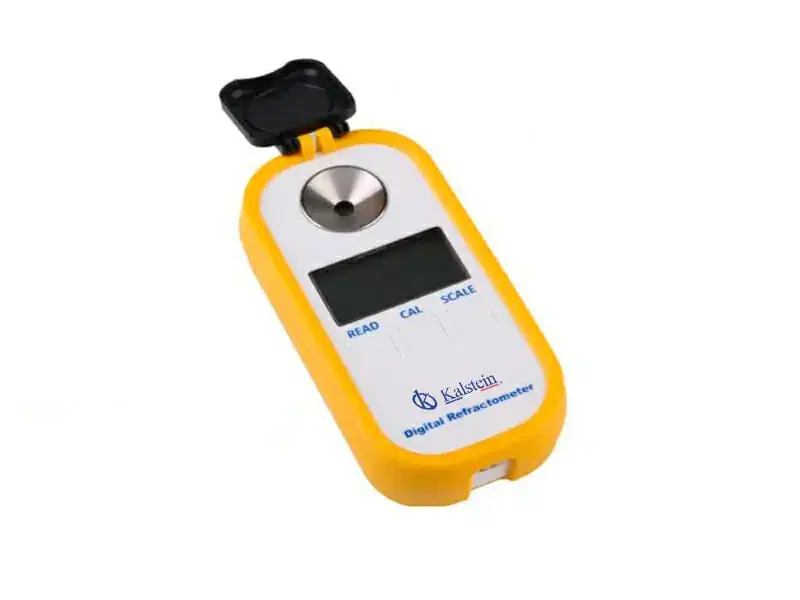
Digital BRIX+ Salinity Refractometer: Step-by-Step Usage Guide 2026
What is it used for in 2026
The Digital BRIX+ Salinity Refractometer is primarily used to measure the concentration of soluble solids in aqueous solutions, particularly in contexts where sugar content is key, such as in fruit juices and syrups. Additionally, these devices are essential for measuring salinity in solutions, which is particularly relevant for assessing sodium chloride levels in various settings, including marine biology, environmental monitoring, and food science.
History and evolution of the technology
The refractometer has undergone significant advancements since its inception. Initially, refractometers were purely optical instruments requiring manual calibration and interpretation. The digital revolution introduced automatic temperature compensation (ATC), allowing more precise and efficient measurements across varying temperatures. The Digital BRIX+ Salinity Refractometers represent the latest evolution, integrating advanced sensors and user-friendly interfaces, making them invaluable tools in modern laboratories.
How to use it step by step
Using a Digital BRIX+ Salinity Refractometer involves a straightforward process that can be summarized in the following steps:
- Preparation: Ensure the refractometer is clean and calibrated according to the manufacturer's specifications.
- Sample Collection: Obtain a small sample of the liquid you wish to test. This should be filtered if it contains solids.
- Measurement: Place a few drops of the sample on the prism of the refractometer.
- Read the Scale: Close the cover and allow the device to stabilize. Read the BRIX or salinity value displayed on the digital screen.
- Record Results: Document the measurements for further analysis.
- Clean the Prism: After use, clean the prism with distilled water to avoid contamination.
Best techniques and protocols
To achieve the best results with Digital BRIX+ Salinity Refractometers, follow these protocols:
- Always perform multiple measurements for accuracy.
- Calibrate the device before each use, especially if measurements are being taken in varying environmental conditions.
- Use samples that are within the operational range of the refractometer to avoid errors.
- Ensure all samples are at the appropriate temperature (0-40°C) to utilize ATC effectively.
- Regularly maintain the instrument to ensure longevity and precision.
Practical applications by laboratory type
Digital BRIX+ Salinity Refractometers find use in various laboratory settings:
- Food Science: Measuring sugar concentrations in juices, syrups, and other food products.
- Environmental Science: Assessing salinity in water bodies, crucial for studying aquatic life.
- Agricultural Labs: Testing the quality of crops and soil through soluble solids measurements.
- Marine Research: Monitoring the salinity levels in oceanographic studies.
Regulations, standards and certifications
When using Digital BRIX+ Salinity Refractometers, one must adhere to specific standards and regulations such as those outlined by the International Organization for Standardization (ISO) and the American Society for Testing and Materials (ASTM). Ensuring compliance not only guarantees accuracy but also enables credibility in published results.
Comparison with alternative technologies
While Digital BRIX+ Salinity Refractometers are highly effective, alternative technologies exist, such as hydrometers and conductivity meters. Hydrometers rely on buoyancy principles and may not provide as precise measurements as a digital refractometer. Conductivity meters are excellent for salinity measurements but do not offer BRIX readings. Therefore, the choice of technology depends on the specific needs of the laboratory and the required measurements.
Comparison of available models
| Model | Best for | Key specs | Recommended use case |
|---|---|---|---|
| YR05961 | BRIX Measurement | Range: 0-50%, Min. Div: 0.10%, Accuracy: ±0.2% | Measuring sugar levels in fruit juices and syrups. |
| YR05962 | Salinity Measurement | Range: 0-280‰, Min. Div: 0.10%, Accuracy: ±0.2% | Assessing salinity in water bodies for environmental studies. |
| YR05963 | Salinity Measurement | Range: 0-280‰, Min. Div: 1‰, Accuracy: ±2‰ | General salinity testing in various solutions. |
| YR05964 | Density Measurement | Range: 1.000-1.217, Min. Div: 0.001, Accuracy: ±0.002 | Density testing for liquids in chemical analysis. |
| YR05965 | Refractive Index Measurement | Range: 1.3330-1.4200nD, Min. Div: 0.0001nD, Accuracy: ±0.0003nD | Measuring the refractive index in various solvents. |
Common mistakes and how to avoid them
Laboratories often encounter common pitfalls when using Digital BRIX+ Salinity Refractometers:
- Not calibrating: Always calibrate the device before use to ensure accuracy.
- Using the wrong sample temperature: Ensure that samples are within the specified temperature range for best results.
- Neglecting cleaning: Regularly clean the prism to prevent contamination and erroneous readings.
- Ignoring the manual: Always consult the user manual for specific instructions and guidelines.
Maintenance, calibration and good practices 2026
Proper maintenance is essential for the longevity and accuracy of Digital BRIX+ Salinity Refractometers:
- Perform regular calibration using reference solutions.
- Clean the prism after each use with distilled water.
- Store the device in a protective case to avoid damage.
- Keep the device away from extreme temperatures and humidity.
Cost-benefit analysis 2026
Investing in a Digital BRIX+ Salinity Refractometer can yield substantial benefits for laboratories. The initial cost is often offset by the accuracy and efficiency gained in testing. Furthermore, reduced waste from inaccurate measurements leads to cost savings over time. In 2026, these devices represent a cost-effective solution for laboratories aiming for precision in their measurements.
Frequently asked questions
How do I choose the right Digital BRIX+ Salinity Refractometer for my lab?
Consider the specific measurements you will be conducting. If you primarily need BRIX measurements, select a model that excels in that area. Conversely, if salinity testing is your focus, choose a model optimized for that purpose.
What are the common applications of Digital BRIX+ Salinity Refractometers?
These devices are commonly used in food science for measuring sugar content, in marine biology for assessing salinity levels, and in agriculture for evaluating crop quality.
How often should I calibrate my refractometer?
It is recommended to calibrate your refractometer before each use, particularly if you are working in varying environmental conditions or if accuracy is critical to your measurements.
What is the best way to clean my refractometer?
Use distilled water and a soft cloth to clean the prism after each use. Avoid abrasive materials that could scratch the surface.
Are there any specific maintenance practices I should follow?
Regular calibration, thorough cleaning after each use, and proper storage in a protective case are essential practices to extend the life of your refractometer.
Can I use a refractometer for both BRIX and salinity measurements?
Yes, some digital refractometers are designed to measure both BRIX and salinity. Ensure you select a model that supports both functionalities.
Where can I request a quote for a Digital BRIX+ Salinity Refractometer?
To request a quote, you can reach out to us directly for personalized assistance and pricing information tailored to your needs.
If you are looking for a fusion of innovation and quality, you have come to the right place. At Kalstein, we offer you the luxury of exploring our exclusive catalog of laboratory equipment. We manufacture every device to the highest standards of excellence. Our intuitive and seamless online purchasing channels are designed for your convenience, securing the most competitive prices. Hesitate no longer — we bring science to life, it is time to become part of our community.