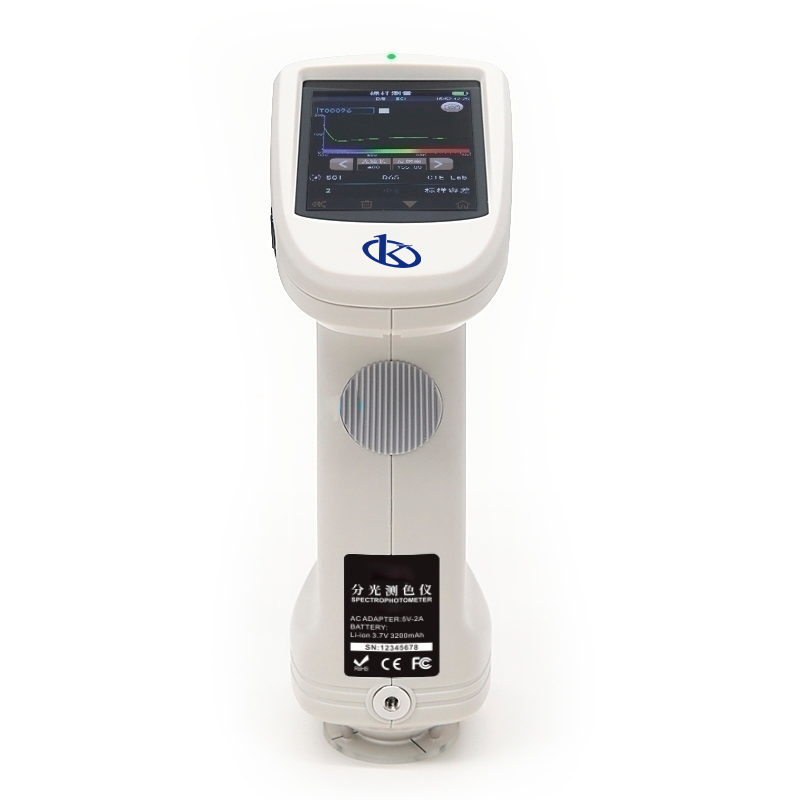
Spectrophotometers are a staple in laboratory environments, crucial for precise color measurement, analysis, and other scientific assessments. Among the various options available, the Grating Spectrophotometer YR05494 from Kalstein and the TOC-625 UV-VIS Spectrophotometer by PG Instruments stand out. This comparison offers an in-depth analysis of each model, evaluating their capabilities and determining which product excels in specific criteria.
The Grating Spectrophotometer YR05494 from Kalstein is a sophisticated tool designed to provide high accuracy in color measurement across various applications. It boasts a scanner structure design that efficiently negates the need for anything other than electronic correction. Equipped with a wavelength range of 380-730 nm and a 2.0 nm spectral bandwidth, this model assures users of precise and reliable data. Its stand-out feature is its long-life xenon lamp, ensuring durability and minimal maintenance over time. Additionally, it has user-friendly features such as dual display modes and a built-in printer for delivering convenient measurements at high precision. This device is marketed for $6,500 and is well-positioned within the mid-to-high price bracket of its category.
On the other hand, the TOC-625 UV-VIS Spectrophotometer by PG Instruments is a versatile model suited for a wide spectrum of analyses, focusing on both UV and visible spectra. Its range extends slightly further, from 190-1100 nm, which makes it suitable for broader applications. It is fitted with a deuterium lamp and provides a spectral bandwidth of 5.0 nm, which is notably wide compared to the Kalstein's model. Targets larger organizations with its higher price point of approximately $7,200, which puts it closer to the high-end spectrum.
| Feature | Grating Spectrophotometer YR05494 | TOC-625 UV-VIS Spectrophotometer |
|---|---|---|
| Wavelength Range | 380-730 nm | 190-1100 nm |
| Spectral Bandwidth | 2.0 nm | 5.0 nm |
| Light Source | Long-life Xenon lamp | Deuterium lamp |
| Price | $6,500 | $7,200 |
How They Work
The Grating Spectrophotometer YR05494 works using a grating monochromator that allows it to separate light into its components to measure specific wavelengths accurately. This operation is complemented by a sophisticated detection system ensuring high fidelity results.
Conversely, the TOC-625 UV-VIS Spectrophotometer operates with a UV-VIS dual beam system. This method caters to a wide variety of absorbance measurements, capitalizing on its broad wavelength range to analyze transparent samples extensively. The deuterium lamp provides a stable light source, though it requires more regular maintenance compared to Xenon lamps.
What They Are Used For
The Grating Spectrophotometer YR05494 is predominantly used in colorimetry, quality control, and research environments where precision is imperative. Its applications span industries including textiles, food, and pharmaceuticals, making it indispensable for companies with a strong need for color standardization.
The TOC-625 UV-VIS, with its wider wavelength capabilities, also finds usage in pharmaceuticals, biochemistry, and environmental sciences for quantifying DNA, proteins, and other analytical tasks. This model is often chosen for its expansive analysis capacity.
Types
Spectrophotometers come in several types, including UV-VIS, IR, and NIR spectrophotometers, each tailored for specific wavelengths and application needs. The YR05494 is a grating type optimized for visible light, while the TOC-625 UV-VIS covers both the ultraviolet and visible spectrums.
Market Price
In the current market, spectrophotometers can range from $5,000 to over $10,000 depending on their specifications and applications. The Grating Spectrophotometer YR05494 is competitive at $6,500, offering a balanced price point for its performance. Meanwhile, the TOC-625 UV-VIS's slightly higher price reflects its broader wavelength capacity and usage flexibility.
Frequently Asked Questions
What is the primary difference between grating and UV-VIS spectrophotometers?
Grating spectrophotometers primarily focus on separating light into its individual colors to measure specific wavelengths, whereas UV-VIS spectrophotometers are designed to analyze absorbance across both ultraviolet and visible spectra.
Which model is better for color quality control in textiles?
The Grating Spectrophotometer YR05494 is better suited for precise color measurement necessary for quality control in textiles, owing to its specific range and spectral bandwidth.
What maintenance is required for each spectrophotometer?
Both models require regular calibration for accuracy. However, the Xenon lamp in the YR05494 generally requires less frequent replacement compared to the deuterium lamp in the TOC-625.
Advantages and Disadvantages
Advantages of the Grating Spectrophotometer YR05494: Accurate color measurement, minimal maintenance with a long-life xenon lamp, user-friendly design with dual display and integrated printer. Slightly more affordable.
Disadvantages: Limited to the visible spectrum, possibly less versatile than some models with a broader wavelength range.
Advantages of the TOC-625 UV-VIS Spectrophotometer: Broad wavelength range, capable of more varied analysis applications.
Disadvantages: Higher maintenance due to deuterium lamp, higher initial cost.
Product Use in the Field
In practical scenarios, the Grating Spectrophotometer YR05494 is used for rigorous quality control in industrial settings, where color precision is mandatory. Its application can be seen in textile factories standardizing dye lots, or in food production maintaining color consistency.
The TOC-625 finds its use in research laboratories where analyzing components requiring both UV and visible light is frequent, such as the study of proteins or environmental samples.
Recommendations
For laboratories primarily concerned with color measurement, the Grating Spectrophotometer YR05494 offers superior function and reliability. Regular cleaning and calibration will ensure its longevity and precision. Furthermore, leveraging Kalstein’s Kalstein Plus platform allows prospective buyers to generate automatic quotes, making it easier to explore financing options.
If you're seeking a fusion of innovation and quality, you’ve come to the right place. Kalstein offers the luxury of exploring our exclusive catalog of laboratory equipment. We manufacture each piece with a level of excellence that is unmatched. Our intuitive and agile online purchase channels are designed for your convenience, ensuring the most user-friendly prices. Don’t hesitate any longer, we bring science to life, and it’s time for you to become part of our community. https://kalstein.ma/product/grating-spectrophotometer-yr05494/.