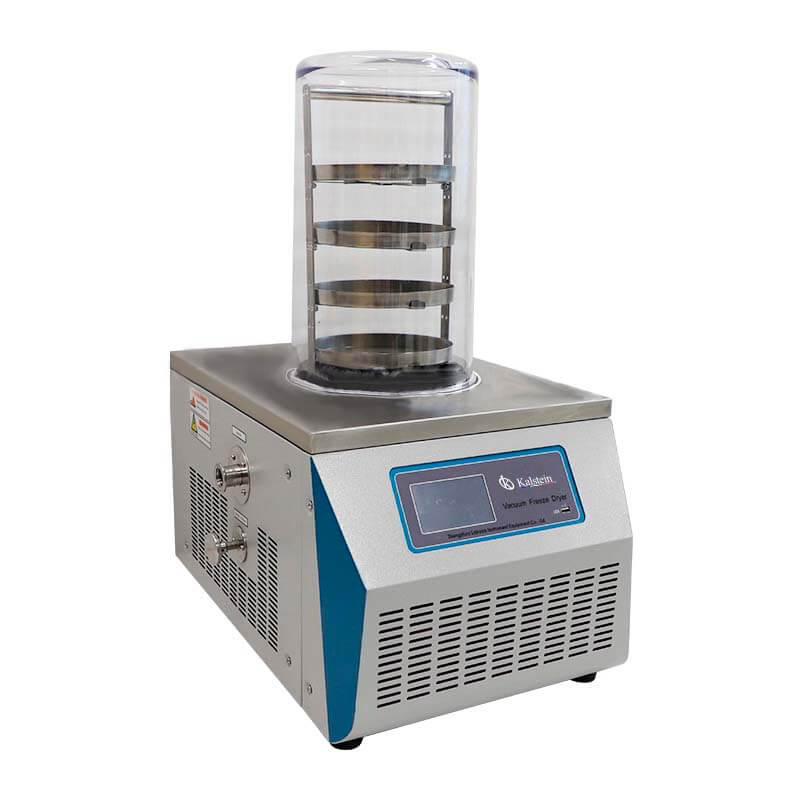
Comparative Analysis of Benchtop Laboratory Freeze Dryers: Choosing the Best Fit for Your Lab
In the ever-evolving landscape of laboratory equipment, selecting the right benchtop laboratory freeze dryer can significantly impact research outcomes and product development. This article delves into a comparative analysis of several models, focusing on their unique features, benefits, and how they stack up against alternative technologies on the market. Understanding these differences is crucial for laboratory professionals aiming to optimize their freeze drying processes.
Understanding Benchtop Laboratory Freeze Dryers
Benchtop laboratory freeze dryers, also known as lyophilizers, play a vital role in various fields such as pharmaceuticals, biology, and food preservation. These devices utilize a process known as freeze-drying, which removes moisture from a product while preserving its structural and chemical integrity. This is particularly important in situations where long-term storage is necessary, and the restoration of the original properties of the materials is critical.
Comparison of Available Models
| Model | Freeze Drying Area | Condenser Capacity (L/24h) | Best For |
|---|---|---|---|
| YR05186 | 0.12 m² | 3-4 | Medium-sized labs looking for efficiency |
| YR05187 | 0.08 m² | 3-4 | Small labs with space constraints |
| YR05188 | 0.12 m² | 3-4 | Large experiments requiring high throughput |
| YR05189 | 0.08 m² | 3-4 | Flexibility in sample size |
| YR05189-1 | Varied | 3-4 | Customizable settings for specific needs |
Comparing Freeze Drying Technologies
When comparing benchtop freeze dryers to alternative drying technologies such as spray drying or vacuum drying, it's essential to consider aspects like sensitivity, throughput, and cost. Freeze dryers excel in preserving the original properties of heat-sensitive compounds, making them ideal for pharmaceutical applications where maintaining active ingredients is critical. In contrast, spray drying offers higher throughput but may not preserve chemical structures as effectively.
Key Specifications and Features
YR05186
The Regular desktop laboratory lyophilizer YR05186 offers a comprehensive drying area and is equipped with a transparent plexiglass chamber, allowing users to monitor the drying process visually. Its 4 stainless steel trays enable bulk processing of samples, making it suitable for medium-sized laboratories focused on efficiency.
YR05187
Featuring a slightly smaller freeze drying area, the YR05187 is designed for flexibility and is ideal for small labs with limited workspace. It shares the same condenser capacity as its counterparts, ensuring effective moisture removal while maintaining a compact footprint.
YR05188
This model stands out for its high throughput capability, designed for large experiments requiring substantial volumes of samples. The YR05188 provides a robust solution for laboratories aiming to maximize their operational efficiency without compromising the quality of dried products.
YR05189
The YR05189 is tailored for versatility, allowing lab professionals to handle varying sample sizes. This adaptability makes it a valuable tool in research settings where different projects may demand specific requirements.
YR05189-1
This model further enhances customization capabilities, catering to specialized laboratory needs. The YR05189-1 is particularly beneficial for labs that handle diverse material types and require precise control over drying parameters.
Common Mistakes and How to Avoid Them
Many laboratory professionals make the mistake of choosing a freeze dryer based solely on price rather than functionality and compatibility with their specific applications. It's crucial to evaluate the required sample sizes, throughput demands, and the types of materials being processed. Ignoring these factors can lead to inefficiencies and compromised results.
Frequently Asked Questions
How does the YR05186 freeze dryer compare to other models for pharmaceutical applications?
The YR05186 model is particularly effective for pharmaceutical applications due to its larger freeze drying area and efficient moisture removal capacity. This makes it well-suited for preserving active ingredients, ensuring stability and efficacy in pharmaceutical products.
What are the best practices for operating a benchtop freeze dryer like the YR05187?
Best practices include calibrating the system regularly, ensuring proper sealing of vials, and maintaining optimal cooling conditions. Specifically, the YR05187's manual press style requires careful handling of samples to prevent contamination and ensure consistent results.
Which model is best for high-throughput needs in academic research?
The YR05188 is an excellent choice for academic research requiring high throughput. Its larger drying area and efficient condenser capacity support extensive experimentation, making it suitable for universities undertaking significant studies.
How can I ensure optimal performance of my freeze dryer over time?
Regular maintenance, including cleaning and checking vacuum seals, is vital for optimal performance. Specifically, routine calibration of the YR05189 ensures that it operates within specified parameters, avoiding potential downtime due to operational failures.
What safety measures should be taken with freeze dryers like the YR05189-1?
Utilizing personal protective equipment (PPE) and ensuring proper ventilation are crucial when operating the YR05189-1. Additionally, understanding the materials being dried and their potential hazards can help mitigate risks during the drying process.
How do the freeze drying processes differ between YR05186 and YR05188?
The YR05186 and YR05188 differ primarily in their drying area and throughput capabilities. While both models efficiently remove moisture, the YR05188 is better suited for larger experiments, providing greater volume processing without compromising quality.
For any laboratory looking to enhance its freeze drying capabilities, it's essential to evaluate each model carefully and choose one that fits specific needs. Comparing models like the YR05186, YR05187, YR05188, YR05189, and YR05189-1 can help identify the best option for your laboratory's requirements.
If you are looking for a fusion of innovation and quality, you have come to the right place. At Kalstein, we offer you the luxury of exploring our exclusive catalog of laboratory equipment. We manufacture every device to the highest standards of excellence. Our intuitive and seamless online purchasing channels are designed for your convenience, securing the most competitive prices. Hesitate no longer — we bring science to life, it is time to become part of our community.